

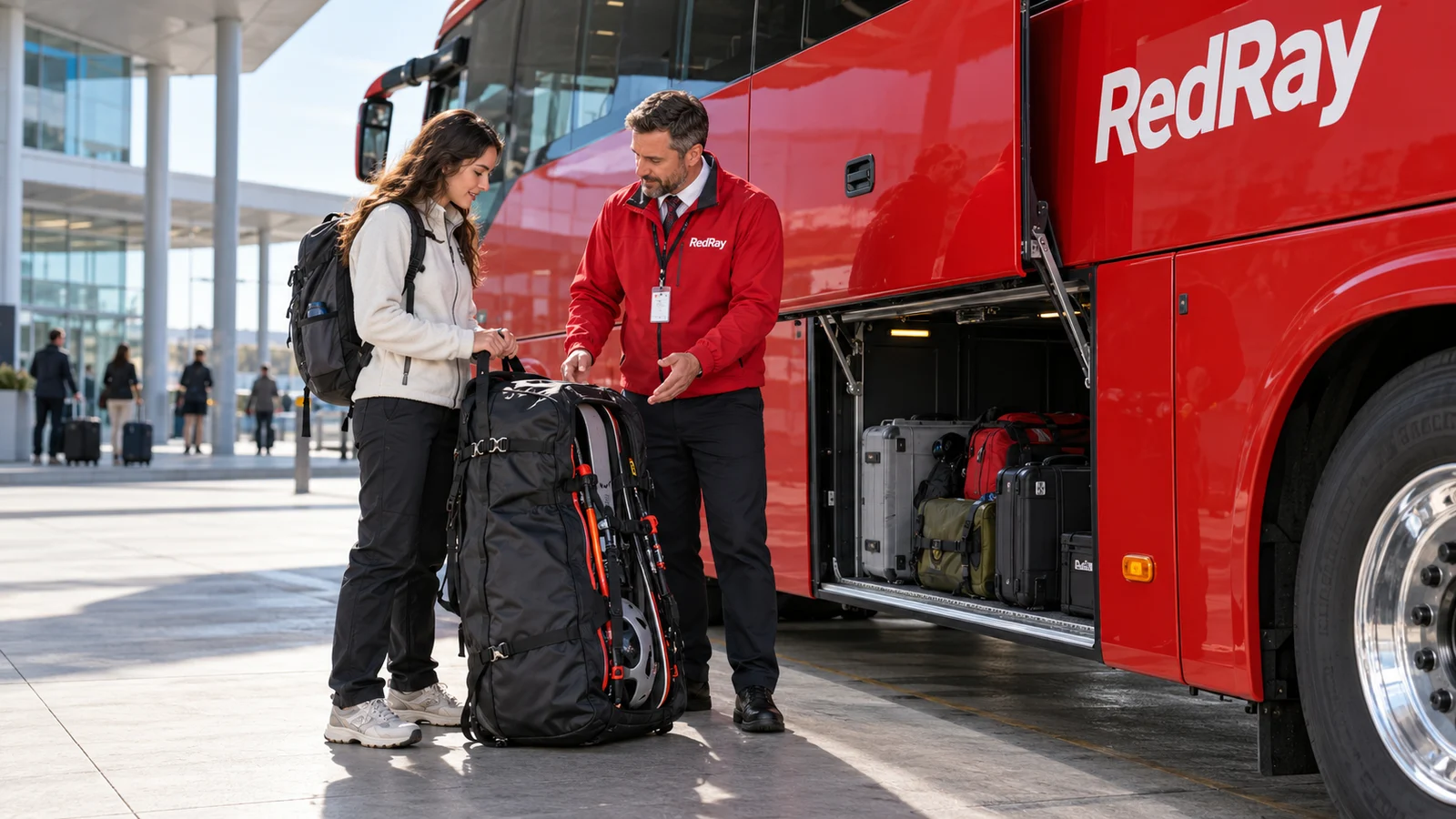
You notified the carrier about a large bag or equipment in advance, received a reply and arrived to board. But a different bus has turned up, and the crew says your luggage will not fit. Separate two checks: what exactly was agreed when booking, and which safe options are possible on the vehicle actually provided.
An approval email does not create physical space in the hold or permit blocking the aisle. Equally, “it is a different bus today” does not explain what will happen to the paid service and your journey. Establish this before departure without leaving belongings unattended or handing them to random people.
Show the specific approval
Open the correspondence or document describing the luggage. Dimensions, weight, number of pieces, item type, required packaging and specific service matter. If you previously asked only “can I bring a large bag?”, the reply may not cover its actual size. Do not hide that difference: a realistic assessment is needed now, not an argument over a vague phrase.
Show payment confirmation if the service was booked separately. Distinguish paid carriage from preliminary advice and the general luggage allowance on the service page. Each is useful, but describes different circumstances. Ask what exactly is recorded in your booking and whether the information reached the crew.
Do not edit old correspondence or add specifications to an issued document yourself. Say if the items changed after approval—for example, two rigid cases instead of one bag. An honest description helps identify a permissible solution; inaccurate information could lead to another refusal after loading is attempted.
Clarify why the luggage is being refused
Is it insufficient volume, excess agreed weight, a prohibited item, unsuitable packaging or another condition? These reasons are not interchangeable. If packaging is the problem, reducing the number of bags may solve nothing. If carriage rules restrict the item, spare hold space does not constitute permission to take it.
Agree safe stowage with the responsible staff member rather than finding an empty recess yourself. Do not place a case in the aisle, beside doors or anywhere that could obstruct people. Do not offer to hold a heavy object on your lap throughout the journey as a universal solution. Actual possibilities depend on the vehicle and service conditions.
Do not ask companions secretly to claim some of your luggage as theirs. This makes identification harder and may breach agreed procedures. If the carrier permits redistribution within a group booking, it must be agreed openly, not based on hiding ownership. On an international journey, everyone must understand what they are carrying.
Who should handle the replacement issue?
The crew assesses actual loading and safety. A dispatcher or other responsible department may clarify the decision for the specific service. The seller helps check the booking and purchased service. Use official channels and briefly explain that approved luggage is being refused following a vehicle replacement and that you are at boarding.
Send the purchase number, date, direction, item specifications and saved approval. If helpful for assessing size, add a clear photo of the luggage itself without documents or other passengers. There is no need to photograph internal crew lists or obstruct staff while trying to obtain evidence of every action.
Ask which options are available and how each affects the ticket and additional service. These might include agreed repackaging, another departure or abandoning part of the plan—but none should be assumed available in advance. Do not promise yourself that the carrier will necessarily find another vehicle or arrange free delivery.
Repack only if it genuinely solves the problem
If the responsible staff member approves repacking, clarify the permitted specifications and a place to work. Do not lay things out in the road or beside wheels. Keep documents, money and valuables separate from items going into the hold. Ensure the new packaging will not open and lets you identify your luggage on arrival.
Do not discard protection for a fragile or expensive object merely to reduce volume. A thin bag instead of a rigid case may create a different risk. Ask whether the carrier accepts the item in its new form and which conditions apply. Finally fitting into the space does not make packaging suitable for a long journey.
If you must leave some belongings behind, choose a clear, safe solution: returning them to someone close to you, official storage or another properly arranged service under its conditions. Do not give a suitcase to an unknown passenger on a promise that “the next bus will bring it”. Storage or shipping documents must reflect the actual handover.
If you are offered travel without the equipment
Consider whether such a journey still serves your purpose. An item may be essential for a sports event, work or moving home, but that does not permit bypassing safety rules. Understand the conditions of available alternatives and your budget. Do not rush into an option whose consequences have not been explained.
If you abandon the journey or choose another service, ask how that decision is documented. Do not assume the original ticket will automatically be refunded. Discuss the passenger seat, paid luggage service and new expenses separately. The outcome depends on circumstances and conditions, so record exactly what has been confirmed.
When travelling as a group, do not decide for everyone without agreement. Some passengers may continue while others choose an alternative. This affects shared belongings, contacts and onward connections. Divide luggage so each person controls what they carry and does not leave documents in the suitcase of someone whose plans changed.
Which facts to retain for a later complaint
- The luggage specifications you provided before purchase and the response received.
- The ticket, booked additional service and its payment, if any.
- The boarding time and place, explanation for refusing the item and replacement notification.
- The options offered, your choice and confirmed actual expenses.
Describe events without unsupported conclusions. “Luggage measuring this size was refused, with lack of space given as the reason” is more precise than “the carrier deliberately deceived everyone”. Do not assume reimbursement merely because you hold a receipt for an alternative purchase. Documents support a review, but the outcome depends on circumstances and applicable rules, not their quantity.
Check general information about EU passenger rights on the official Your Europe portal. Do not automatically equate every luggage problem with the consequences of an accident or a delayed service: these are different circumstances. This material helps organise checks and a complaint, but does not establish a universal compensation amount for your case.
Questions and answers
Does written approval guarantee that luggage will fit any bus?
No. It helps check the agreement, but safe stowage must be established for the vehicle that arrived. If carriage is impossible, clarify alternatives and how the decision is documented.
Can a large bag go in the aisle for a short journey?
Do not use an aisle or doorway as an unauthorised luggage space. A permissible location must be agreed with the responsible staff member without obstructing passengers.
Should I remove a protective case to make the item fit?
Only if the new packaging is genuinely suitable and approved. Reducing volume at the cost of damage or inadequate protection is not automatically safe.
If luggage prevents me travelling, will all expenses be refunded?
That cannot be promised in advance. Keep approvals, the ticket, additional services and timeline, and separately clarify how the seller and carrier will review your case.
Useful links
Check your purchase conditions through contacts on the RedRay website. General official information is available on the Your Europe portal. Source checked: 21 October 2026; applicability of the rules to your particular journey must be established separately.