

The bus has continued, and you notice that a suitcase unloaded at an intermediate stop was not put back in the hold. Or a companion got off, you divided belongings and one bag remained beside a bench. The most useful first actions are to tell the crew and identify the precise location and circumstances, rather than demand an immediate turn-around without assessing the road.
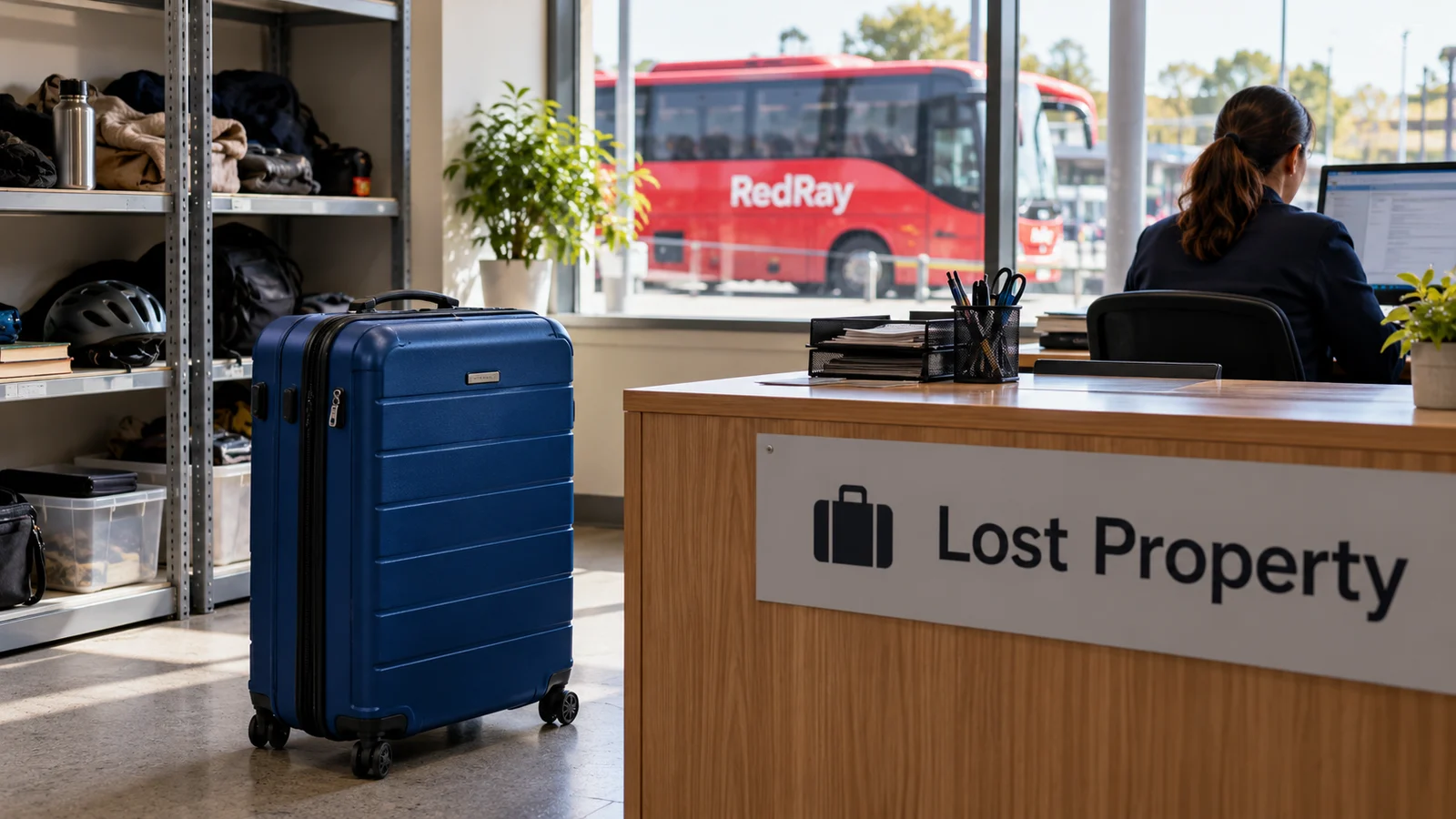
This differs from searching for items in the cabin or collecting luggage at the terminus. The suitcase may be somewhere along a route the bus has already travelled, requiring coordination with people there. Return, storage and onward delivery are not automatically available services: each option must be checked and properly agreed.
Report it as soon as you notice the discrepancy
Contact an available responsible staff member in the established safe way. Do not distract the driver by shouting suddenly or showing your phone during a difficult manoeuvre. Briefly say that a particular bag may have remained at the last stop and explain why you think so. Distinguish a confirmed fact from an anxious guess.
If you saw the suitcase on the platform before departure, say so. If you merely cannot find it beside you, first ask whether it could have been properly moved to another agreed place. Do not open the hold yourself or ask a companion to do so at a random stop. Follow the crew’s checking procedure.
Do not wait until the terminus merely from embarrassment. While events are fresh, it is easier to establish the exact address and contact the relevant service or facility there. Equally, do not assume early reporting guarantees recovery. It helps organise a search, but the result depends on the item’s actual location and available options.
Six details to provide first
- The date, direction and journey or booking number.
- The specific stop and approximate time the suitcase was last seen.
- The location within the site: beside a bench, staff desk or another clear landmark.
- The bag’s colour, size, material and distinctive personal marking.
- Whether a luggage receipt or other confirmation exists, if issued.
- An available private contact for further coordination.
Instead of “at a petrol station somewhere after the city”, try to reconstruct the location from your ticket, the crew’s message or your own map. If you do not know its name, describe the facts you remember and ask for help identifying the stop. Do not confidently give a random address: searching in the wrong place wastes time and can falsely suggest the suitcase is nowhere to be found.
Prepare a photograph of your bag if you already have one. Do not share it together with your passport, full ticket and banking details in general groups. Its appearance and a private description are enough for initial recognition. Keep contents that help establish ownership for the particular responsible recipient handling your request.
How to find an official contact at the stop
If it is a bus station or another facility with a lost-property service, find its contact through an official resource. Do not call the first number in an advertisement at random. If the stop is small and lacks its own channel, ask the carrier how to contact the proper party. Do not present an assumed “left-luggage office” as a confirmed service.
In your message to the location, briefly describe the item, time and part of the site. Ask whether it has been found, who will handle further contact and what collection requires. Do not demand access to internal cameras or staff members’ personal information. Any possible check is organised by the responsible party under its procedures.
If the crew helps make contact, ask about the result, not merely whether a call was made. “We notified them” and “the suitcase was found and accepted for storage” are different states. Ask what is confirmed now and who will provide the next update. This avoids contradictory instructions being duplicated across several people.
What not to demand while the bus is moving
Do not insist on an unsafe stop, reversing or an unauthorised return across central reservations. The responsible party decides routes and possible stops with safety and service arrangements in mind. The importance of your item does not make every manoeuvre permissible. Ask which options are available rather than dictating them emotionally.
If you are offered the option of leaving at another stop and returning independently, assess whether you have a clear safe plan, documents, communication and budget. Do not get off at the roadside merely to “somehow catch a lift”. Separately clarify consequences for your ticket, remaining luggage and companions staying on the bus.
If the suitcase contains items essential for a child or someone with a particular need, mention this without unnecessary public detail. It matters for planning further action, but does not promise immediate delivery. Arrange urgent needs separately using real available options rather than waiting for an unknown search period.
When the item is found
Ask who actually holds the suitcase, where to collect it and how to establish ownership. Do not give unnecessary documents to whoever messages first on social media. Compare their message with the official contact or your request’s outcome. If a copy of a particular confirmation is required, establish why and through which channel to send it.
If you authorise someone close to you to collect it, agree the procedure with the responsible party. Do not assume giving your surname is enough. Procedures differ between locations. Do not share account access codes as a universal proof of the collector’s authority. Use a proper method accepted by the person holding the item.
Agree delivery or handover through another transport service separately: who accepts it, who receives it, its packaging, conditions and handover confirmation. Do not treat every bus of the same company as a courier service. A verbal “we will send it on the next service” needs specifics, or you will not know where to look next.
If the location is not confirmed
Keep the request reference or correspondence, contacts list and timeline of known events. Ask the carrier about the further review procedure. Do not infer theft merely because a reply was not immediate. If there are specific signs of an offence or other grounds, contact the competent authority through the proper procedure in that country.
For a claim, establish how the item ended up outside the bus, who controlled it and what happened after the stop. Do not change your account in response to others’ advice. Receipts, a luggage slip, photos and messages may help checks, but possessing them does not guarantee a particular result or automatic payment.
After collection, check your suitcase and the obvious condition of its contents in a safe place. If you notice damage or missing items, record facts and establish the proper contact channel. Do not publicly post photographs of documents from inside. Deal separately with any subsequent document or access security issues according to what actually happened.
Questions and answers
Must the bus immediately return for the suitcase?
Do not demand an unsafe or unauthorised manoeuvre. Give the crew the exact circumstances and ask about available search and collection options within the service’s arrangements.
Which photo should I send for the search?
A photo showing your own bag’s exterior without unnecessary documents or personal information. Give its colour, size, marking and precise last location to a private official contact.
The suitcase was found—can I ask the next bus to bring it?
You can ask about an available proper method, but do not assume the service exists. Handover, conditions, recipient and confirmation must be agreed separately.
Does the absence of a quick reply prove theft?
No. Separate established facts from assumptions. Keep a timeline, use official contacts and contact the competent authority where there are reasonable grounds.
Useful links
For clarification of your journey, use contacts on the RedRay website. Find other instructions about travel belongings in the RedRay blog. This article does not guarantee a lost-property service at every stop, a search time or a delivery method.