

You have left the drop-off point when you notice an unfamiliar ribbon on the handle. The suitcase’s colour and size match, but it is not yours and the bus has continued. A lost-luggage report alone is no longer enough: your own luggage is missing while someone else’s is with you. Tell the carrier both facts immediately so searching and returning do not become unrelated stories.
Do not open the suitcase for its owner’s number or give it to the first person replying in a chat. First check external features, notify the official contact and agree a handover method. This procedure does not guarantee a quick exchange, but helps avoid another mistaken release and unnecessary disclosure of others’ data. Do not run after the bus, step onto the carriageway or independently enter a closed depot.
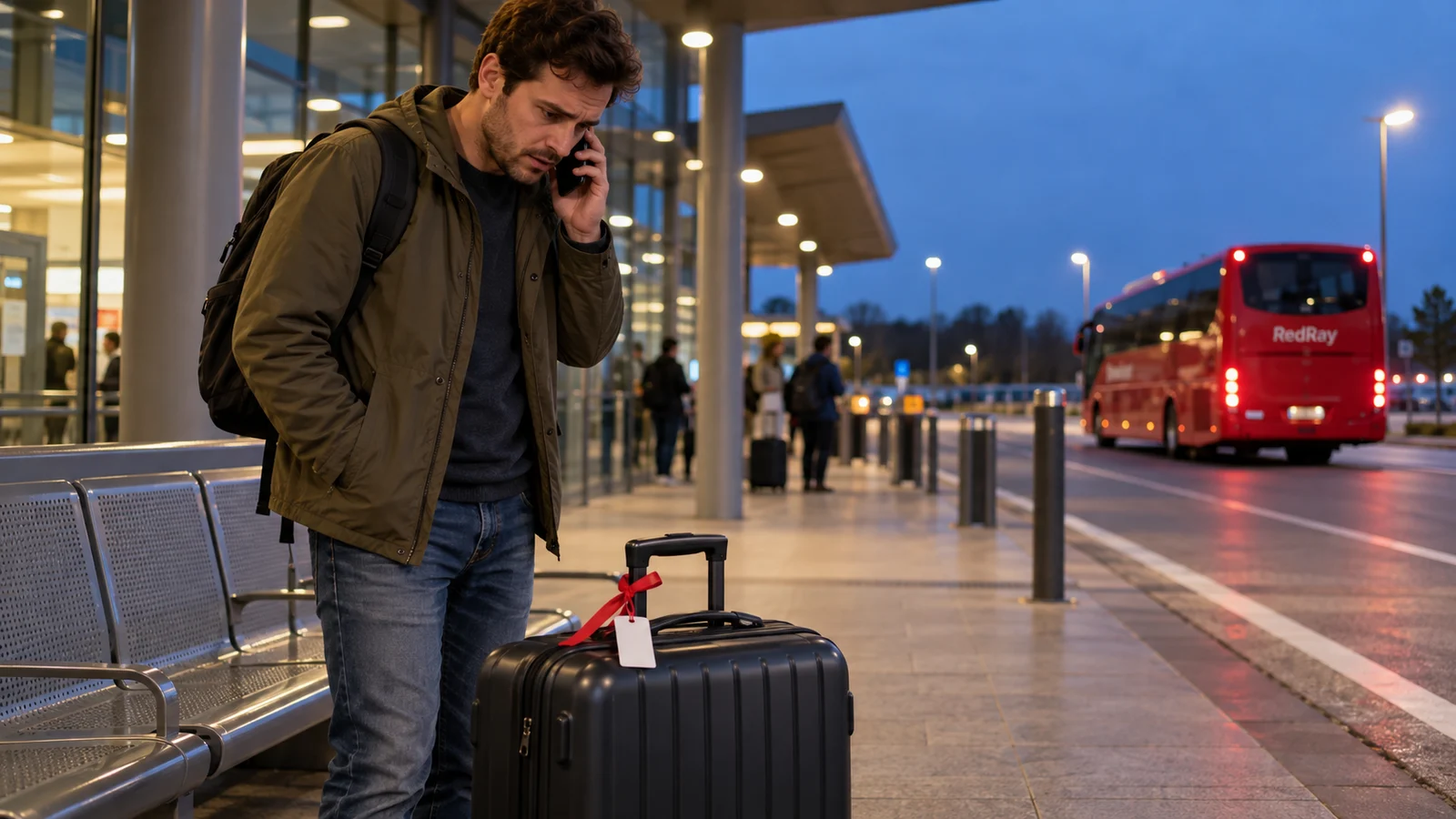
Establish the mistake without investigating the contents
Stop somewhere safe and compare the case, handle, markings and available external tag with your photo or memory. Check whether it belongs to a companion. The aim is identifying a different item, not inspecting its contents. If external features are insufficient, tell the carrier you are unsure and ask for a proper verification method. Do not spread someone else’s belongings around the terminal.
If you noticed only after opening it, stop looking and do not copy documents found inside. Close the suitcase without further interference and truthfully explain circumstances if needed. Do not read messages on a device found inside or search for a contact through personal accounts. Learning an address from someone else’s paper does not mean independently delivering luggage there without agreement.
Do not assume your suitcase must be with this same person. Other locations and several similar items are possible. Until confirmed, “We simply swapped” is an assumption. A more accurate support report is: you took another suitcase, do not currently have yours and do not know its whereabouts. This does not restrict the search to an invented two-person swap.
Give one official recipient both parts of the situation
Use the actual carrier’s ticket contact or verified website. Give the date, direction, service if available, drop-off place and approximate time. Then clearly separate the description of your missing suitcase from the other one now with you. Do not send one photo saying “Find the owner”: staff also need to know which item to find for you.
- My suitcase: colour, shape, distinctive marking and photo if available.
- Currently with me: external description of the other suitcase without publicly revealing its tag.
- Event: where I collected luggage and when I established the mistake.
- Current situation: where I am safely located and how to contact me.
- Request: coordinate return of the other item and enquiries about mine.
The official FlixBus lost-property page specifically instructs people to report luggage taken by mistake and whether they still have it. This illustrates one company’s process. If another carrier operated your service, establish its procedure rather than reporting to an unrelated network merely because its form is easy to find.
Retain a report number or copy if provided. If using another official channel for urgent coordination, refer to information already submitted. Do not create several descriptions with different locations and times. If initially mistaken, clearly correct the same fact: for example, you named a neighbouring stop instead of the actual drop-off point.
Do not create another loss while awaiting a response
Do not leave the other suitcase unattended near a kiosk, in a passage or with “The owner will collect it”. If you cannot remain where you discovered the mistake, tell the official contact your onward plan and ask for an available agreed option. A storage facility’s existence does not mean it will accept the item on those terms or that the owner can subsequently collect it.
Do not put your own things in the suitcase for convenience or discard its tags. Preserve its external condition as far as possible without unnecessary interference. If you see leakage or other signs of possible danger, do not check contents yourself; report what you see to terminal staff or the relevant service and follow instructions. An unknown item must not become an everyday experiment.
If another boarding is approaching, directly state the time constraint. Do not promise support you will wait if you already intend to leave. But do not hand the luggage to a random driver of another service merely to make your own. Coordinate your onward journey and proper handover separately rather than resolving one through another opaque transfer.
A tag helps contact but must not become public
Do not post a photo showing the owner’s name, phone or address in a general chat. If the official search channel needs particular tag information, provide it privately to the extent appropriate. A general situation description without personal details or a full booking number is enough publicly. Do not publish every distinctive feature that may later be needed to verify a claimant either.
If calling an external contact number, briefly explain and suggest coordination through the carrier. Do not demand a passport by messenger or send yours to an unfamiliar recipient. Direct contact may help, but does not prove every exchange detail. Establish where your suitcase is, who actually holds it and which handover method suits both parties.
Do not follow a “luggage return” link unexpectedly sent by an unknown person or enter banking codes. For delivery or storage, verify the actual provider and conditions through a known channel. Do not call a private transfer a mandatory carrier charge merely because the person knows the suitcase colour. They may have seen that in a public post.
Handover must be specific and verified
Agree the location, time, recipient and handover-confirmation method. If a carrier employee is involved, verify their company connection through the official contact rather than only a uniform or confident words. Do not seek the bus independently on closed premises. If a collection point is proposed, establish access and acceptance arrangements before travelling there with the other suitcase.
If owners agree to meet personally, choose a clear safe place and verify ownership without collecting unnecessary data. Do not consider one “It is mine” message enough in a complex or conflicting situation: ask the responsible party to coordinate. Do not hand over the suitcase on a condition that “They will tell you where yours is later”. Returning another person’s item must not become informal collateral or bargaining.
If a courier is suggested, establish who orders the service, what is accepted, which confirmation is provided and who approves costs. Do not assume free delivery, insurance or acceptance of undescribed contents. For international shipment, do not sign an invented goods description: a bus mistake does not override another movement method’s rules. If contents are unknown, tell the responsible party.
Track two statuses until final completion
The other suitcase may already have been accepted at an agreed place while yours is still being sought. Retain the confirmed handover fact and continue your enquiry with the same accurate description. Do not close it with “Luggage returned” if you only returned someone else’s. Conversely, recovering yours does not finish the other passenger’s issue if their item remains with you.
When your suitcase is found, check external features again before accepting it. If damage or a missing item is noticed, separately report facts without attributing the event to a particular person without evidence. For general searching, use the article on lost luggage, but retain the particular mistaken-swap circumstances in your account.
Do not expect a blog-defined reimbursement amount for time, taxis or other expenses. Your Europe’s bus passenger rights information distinguishes ordinary loss or theft from loss or damage caused by an accident. A particular enquiry is assessed under circumstances and applicable conditions. Keep actual expense documents without turning them into a payment promise. Sources checked on 23 October 2026.
Questions and answers
Can I open someone else’s suitcase to find an address?
Do not use that as a search method. Start with external features and an official carrier enquiry. If you opened it before realising the mistake, stop looking and do not copy others’ data.
Do I need two reports: one for my suitcase and one for theirs?
The company’s procedure determines this, but state both facts in the first message. Ask for proper reporting and linked information without conflicting descriptions.
The owner offers a private exchange. Is that always wrong?
Not necessarily, but verified ownership and a specific safe agreement are needed. If unsure, coordinate through the carrier; do not publish passports or agree an unclear exchange through a random intermediary.
My suitcase was found. Can I stop replying to support?
First establish whether return of the other suitcase is confirmed too. Report both outcomes precisely: you received yours and identify whom you gave the other to. These are separate parts of concluding the event.
Who pays delivery if we are in different cities?
Do not decide the payer yourself. Agree conditions, possible options and costs with responsible parties before ordering. This article does not guarantee free forwarding or compensation.