

A camera stopped working, and the centre agreeing to inspect it is abroad. You decide to take it by bus, leave it for repair and collect it on another trip. Ownership does not change and there is no sale, so it is easy to assume putting the device in your carry-on bag is enough. But the purpose of movement differs from ordinary camera use on holiday.
The plan consists of separate decisions: whether the repair centre accepts the device, how its movement across every border is organised and whether the particular bus permits carriage in its actual condition. A warranty card does not automatically answer all these questions. Check before paying for travel and handing over the item, not only before returning with repaired equipment.
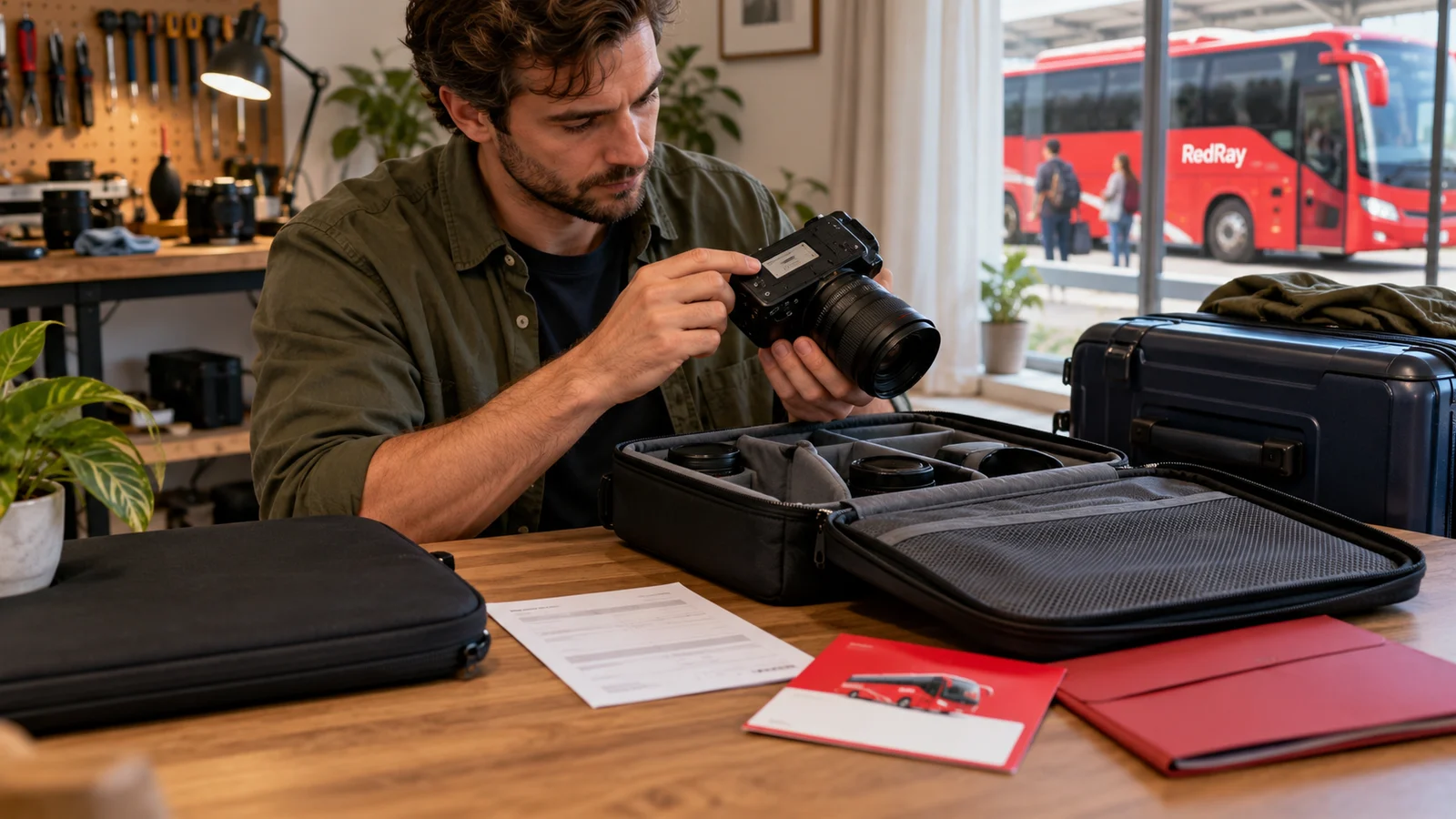
First describe the operation without informal shortcuts
Describe the item, owner, departure and repair countries and expected outcome. For example: your own used camera is going to a repair centre for diagnosis and possible repair, after which you plan to return it to Ukraine. If diagnosis may lead to replacement of the whole device, state that too. “I am carrying my own equipment” does not convey the difference between use, handover to a technician, exchange and leaving it abroad.
Do not call repair free until the centre confirms that. Do not write “It will return unchanged” if parts are expected to be replaced. An enquiry needs actual circumstances, not desired wording supposedly simplifying processing. If the centre has not decided yet, explicitly list possible outcomes and ask at which stage procedures for each need clarifying.
Ordinary preparation of personal equipment for the border remains useful for keeping belongings accessible, but does not replace checking the repair operation. Do not transfer a previous holiday’s experience to this journey solely because the serial number is the same. What matters is why you cross the border with the device and what will happen to it next.
The repair agreement must describe acceptance and return
Before booking, establish whether the workshop accepts personal delivery, at what hours and under what appointment arrangement if required. Do not insert random map opening hours into the plan. Clarify the actual acceptance address: a sales office, collection point and repair centre may be different places. The bus takes you to a designated stop, not automatically to the technician who saw your enquiry.
Ask what the acceptance document will record: model, identifying features, accessories handed over and the reported problem. If supplying a charger, lens or separate unit, clarify how these are recorded. A repair-centre contract document and a customs document serve different functions. Having one does not prove the other is unnecessary; workshop staff do not determine procedures at another country’s border.
Ask about possible outcomes: repair of the same item, return without repair or an offer of another device. Understand how work will be described and whether the identifier changes. Do not demand a version favourable for border control in advance. Instead agree that actual work and items handed over will be clearly reflected in proper documents.
Ask customs questions before departure, not after repair
Contact competent authorities with the prepared description, not “Can I take a laptop on a bus?” Establish export, entry for the stated operation and subsequent return procedures. Separately explain that you are a scheduled-bus passenger, giving the planned route and how the item accompanies you. If processing before reaching the crossing or another responsible party’s involvement is required, establish this beforehand.
Ask which supporting materials identify the item and who is responsible for the relevant actions. Do not choose a customs-procedure name merely because it sounds like “Taking it temporarily and bringing it back”. Official Swedish Customs guidance on temporary admission distinguishes repair from ordinary temporary use. This is a reason to check the applicable procedure, not a ready-made assignment of one to your journey.
The Tullverket page on inward processing describes the need for the relevant authorisation. It concerns its own jurisdiction and does not automatically make a passenger an authorised participant. Clarify whether such a procedure applies in your case, who can fulfil the requirements and whether you can organise travel in the chosen way.
Do not use a document for demonstration samples as a universal repair solution. French Customs guidance on ATA specifically cautions about goods intended for repair. Clarify the Ukrainian side of movement separately through official State Customs Service channels. Sources checked on 23 October 2026; this article promises no exemption from charges.
Preserve the link between the product and its history
Before packing, record the model and available identifier, checking legibility in existing documents. If a serial number is worn off or absent, do not create your own “official” marking: report this in the enquiry and establish a suitable identification method. A home photo may help the description, but does not itself replace confirmations required under the applicable procedure.
Keep materials about the item’s origin, repair-centre correspondence and customs documents or explanations separately. Retain originals where needed and offline copies for reference. Do not edit dates, amounts or identifiers to make them appear identical. If a paper contains an error, ask its issuer for proper correction rather than changing an image on your phone.
Remove unnecessary personal details from ordinary correspondence when the recipient does not need them. The carrier does not need personal files stored on the device to answer a case-dimensions question. For service acceptance, establish beforehand which access is genuinely required and how to provide it. Do not send every account password with a ticket photo merely because a device needs diagnosis.
A device fault matters to the bus too
Seek agreement based on actual condition, not just box size. If the problem involves a battery, case damage or other properties affecting safety, tell the carrier before paying and obtain a specific answer. Do not conceal a fault behind “An ordinary camera”. Customs processing and acceptance for bus carriage do not replace each other.
Do not dismantle or modify the device on random advice to fit luggage requirements. If carriage requires a specialised method, consider it a separate option to check, not a service the bus driver must arrange at boarding. Packaging must protect the product and match agreed stowage. Do not add undescribed accessories after receiving an answer.
When planning acceptance day, leave room between bus arrival and the workshop appointment. This does not guarantee meeting a particular hour: checks and travel may take longer. If appointments are required, establish how to report lateness. For the return bus, do not treat an initial repair estimate as confirmed completion and readiness of every document.
Check the actual outcome before the return ticket
Obtain a clear description of what is being returned. Compare model, identifier and set with the acceptance document. If another camera replaces yours, do not call it the same item for convenience. You need actual replacement documents and fresh clarification of onward movement. Even an identical model does not mean the item exported earlier is unchanged.
Check which further actions complete the procedure used and whether your case has specified deadlines. Do not treat a repair receipt as automatic closure of the customs issue. If a document is still being prepared or the repair outcome changed, clarify procedures before firmly committing to a bus date. Truthfully describe return without repair too, with available acceptance and release confirmation.
After travel, retain one chain: what you took, what you handed to the workshop, what it actually did and what you returned. Do not mix it with new purchases from the same trip. If an unresolved procedural question arises, contact the competent service or qualified representative with full materials rather than seeking universal advice “for every repair”.
Questions and answers
If the device is mine and used, do I not need to explain the repair?
Truthfully state the purpose when relevant to processing or an enquiry. Ownership does not make a repair operation identical to ordinary use during travel.
Does a workshop email automatically let me cross the border?
No. It may describe an agreement with the workshop, but does not replace customs requirements or separate carrier agreement. Clarify every document’s purpose before leaving.
Can I use ATA simply because the item will return?
Do not choose this independently. Official sources distinguish repair from typical ATA cases. You need clarification about the particular operation, countries and responsible party.
The centre offers an identical new replacement. What changes?
Record the actual replacement and identifiers, and establish its movement procedure before returning. Do not transfer the old item’s documents to another or edit identifiers in your copies.
Can I immediately buy a return bus for the promised readiness day?
Assess the risk separately: the workshop’s forecast does not confirm work completion or every required procedure. Check ticket-change conditions and actual item readiness without assuming automatic reimbursement if delayed.