

Other passengers are already returning to the bus when you are told you are not allowed to continue entering. At that moment, it is easy to mix up three things: the border authority’s decision itself, bus arrangements and onward transport. First calmly establish whether checks are still continuing or a specific decision has already been made, and what document and instructions you are receiving.
The following primarily concerns the ordinary procedure for refusing entry to a third-country national at an external Schengen border. It is not a universal account of refusal to allow departure from Ukraine, asylum procedures, international protection or situations involving people with free-movement rights. If your case belongs to another category, you need the relevant official explanations and, where necessary, professional assistance, not mechanical application of this outline.
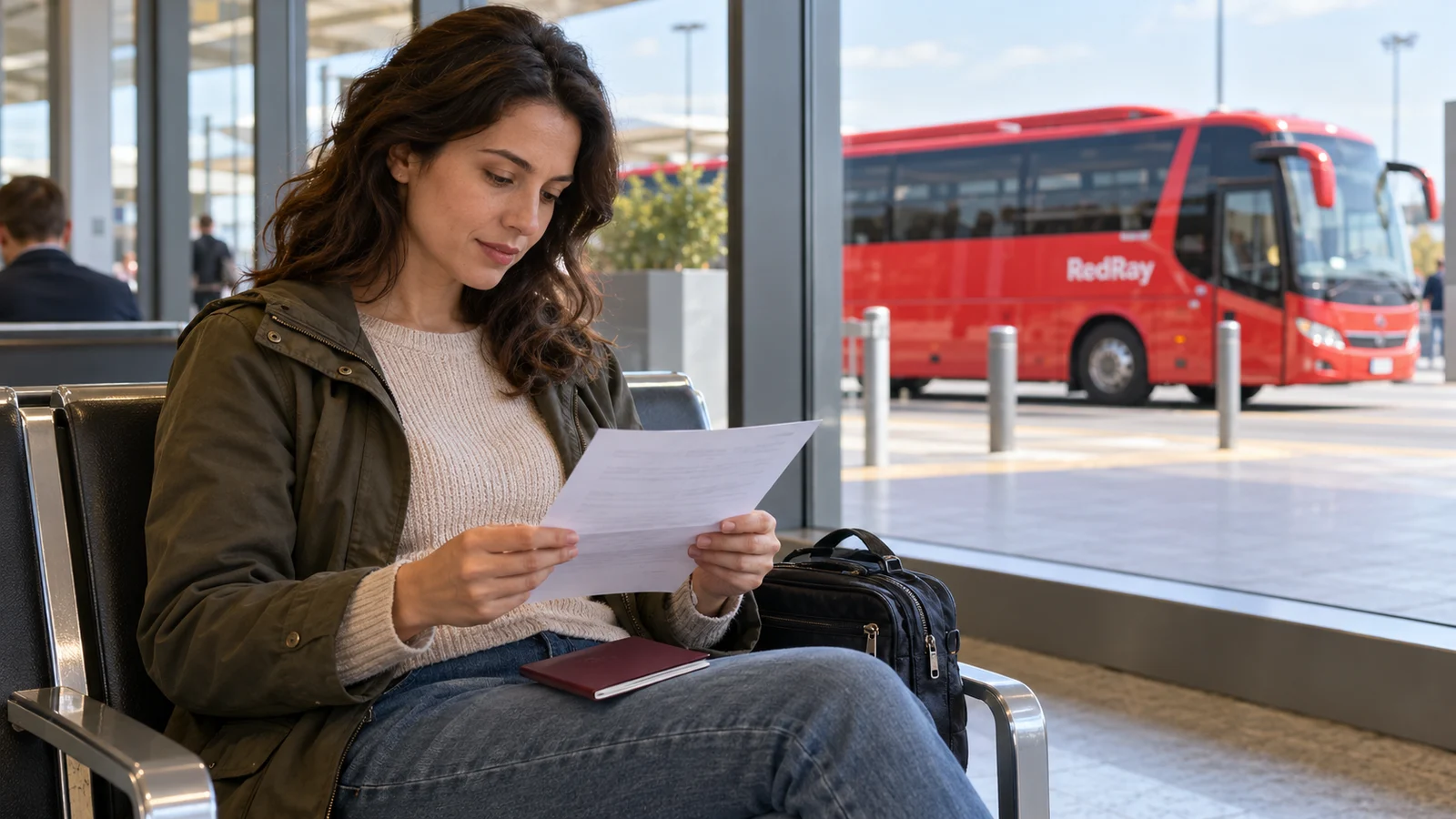
First establish what stage is taking place
Ask briefly: “Are checks still continuing, or have I been notified of a refusal-of-entry decision? What action is expected from me next?” Do not determine your status from the waiting time, an officer’s expression or a fellow passenger’s words. Further document enquiries and a final decision are different circumstances that also need to be communicated differently to the crew.
If a specific decision is identified, ask which document records it and how to obtain the appropriate copy. Article 14 of the Schengen Borders Code provides for a substantiated decision stating the reasons on a standard form. This describes the relevant procedure, not grounds for demanding the same form in every country and every procedure informally described as “not being let through”.
Do not argue through the driver that buying a ticket itself guarantees entry. It confirms carriage under the purchase conditions, but does not override government checks. Equally, do not ask another passenger to go through for you or take your document to another queue. You need to understand the decision concerning you, not create another uncoordinated attempt.
Read the document before jumping to conclusions
Check whom the document concerns, which authority issued it, the date, place and stated grounds. Do not post the whole sheet in the bus chat asking people to explain every line. If the text is unclear, ask for an appropriate explanation that is available and clarify the language-assistance procedure. Informal translation can suggest questions, but must not silently alter the decision’s meaning.
Separately ask exactly what a proposed action or signature means in this document. Do not equate acknowledgement of receipt with any arbitrary statement of consent or admission, but do not randomly decide that every signature can simply be ignored either. Ask the responsible officer about the field’s purpose. Do not add your own alternative version to a copy as though the authority had issued it.
Find out where information about further contact, the recipient and the applicable procedure is provided. The right of appeal and how to exercise it must be checked under the appropriate rules. Do not borrow a deadline from someone else’s post about another country or decision type. In particular, under the procedure described, lodging an appeal alone must not be treated as automatically suspending the decision or authorising continuation of your bus journey.
Agree where to wait and the immediate next action
Ask where you should stay, whose instructions to follow and how you will be notified of the next stage. Do not independently go onto traffic lanes, into another hall or back into the passenger compartment simply because your belongings remain on the bus. A controlled area has its own movement rules. If you need documents, communication or an important personal item, tell an officer the specific need and agree how to address it.
Do not assume you may leave the crossing on foot, take any taxi or choose another crossing for a further attempt. The next transport must comply with official instructions and your documentary circumstances. A friend’s suggestion to “just buy another bus ticket” resolves neither the decision itself nor permitted movement from your current location.
If you are with a child or someone who needs assistance, or have another significant need, report it promptly. Do not casually change accompanying arrangements based on a private agreement with another passenger. If needed, ask how to obtain appropriate support. Explaining a practical need must not turn into distributing diagnoses or family documents among all passengers.
The crew needs facts about you and your belongings
Through a permitted channel, report that you have received a specific decision or that its contents are still being explained. Identify yourself, the service and a return-contact method. Do not promise to return in a few minutes if that arrangement has not been confirmed. The crew must not mistake your hope for permission to continue carriage.
Clarify the situation of your carry-on bag and larger luggage: where they are, how access or handover is possible and on whose instructions. Do not ask another passenger to secretly take a suitcase through the check. If belongings are shared with family, explain this to both responsible parties and establish the permitted procedure. The decision document and luggage arrangements are practically connected, but are not one issue.
If calls are not permitted or there is no connection, ask an official to suggest an acceptable way to inform others. Do not give a random intermediary your email password, codes or all your documents in exchange for a promise to find the driver. Brief practical information is usually enough to initiate contact; send the decision’s full contents only to an appropriate recipient where genuinely necessary.
Separate the official procedure from your purchase
Ask the carrier or seller what action is needed regarding your current seat, subsequent sections and return ticket. Do not write a general “Cancel the whole journey” if you want to retain other sections. For a group booking, identify the specific passenger. Do not independently extend a decision concerning one person to every family purchase.
Do not buy an alternative until you establish whether you can actually use it and reach its boarding point in a permitted way. Seats available for sale do not mean that particular onward route is available in your situation. If transport or another service is offered, clarify the responsible party, conditions and confirmation rather than transferring money to an unknown profile.
Check financial consequences separately against the purchase conditions and circumstances. Refusal alone does not allow this article to promise a refund or assign all costs to a particular party. Keep documents and explanations, but do not describe an expense already incurred as reimbursement already agreed. The priority is a safe, proper procedure for subsequent action.
Prepare the facts for competent assistance
Keep the decision, your travel document, relevant journey confirmations and a short timeline in one private set. Mark what is known from papers, what was explained verbally and what remains unclear. Do not infer officers’ intentions or supplement the refusal reason with assumptions: a professional needs the decision’s contents and your actual circumstances.
If needed, contact a competent legal representative or your country’s consular office through an appropriate channel. Do not require a consulate to guarantee reversal of a foreign decision. If someone offers paid help, check who they are, exactly what service they provide and on what terms. A confident promise to “sort out the border” is not proof of authority.
After a new explanation or document, update the plan and inform only those responsible for a specific action. You can give relatives your actual situation and the next contact time without a full copy of the decision. Once the process ends, keep the final outcome separate from the first verbal message so you do not later describe an unfinished stage as final or vice versa.
Questions and answers
Does a long check automatically mean refusal?
No. Ask the responsible officer about the actual stage. Waiting, an additional enquiry and a reported decision must not all be described in the same way.
Can the driver reverse the decision if I have a paid ticket?
Do not assign that authority to the crew. They help organise carriage, while a government decision must be addressed through the proper official procedure.
Does submitting an appeal mean I can continue travelling?
Do not draw that conclusion. In the ordinary Schengen procedure described, an appeal does not have an automatic suspensive effect. Clarify specific next steps with the competent authority and a professional.
Can I collect my suitcase from the bus myself?
First agree access with border-control staff and the crew. Do not move without permission or ask another passenger to move belongings without agreement.
Will payment for all subsequent buses be refunded?
This cannot be promised generally. Identify each document to the seller, check the conditions and possible actions, retain the facts and do not cancel the whole group with an accidental general phrase.
Official sources and related situations
Checked on 23 October 2026: Article 14 of the Schengen Borders Code, the explanation of the standard form and the European Commission’s official section on border crossings. If there is no final decision yet, read about contacting the bus during additional checks. For an unclear field, see the article on clarifying an official form. National procedures and your category must be checked individually.