

You have boarded an international coach, placed your bag on the shelf and noticed the onboard toilet door is locked. The service page displayed a toilet icon, a long journey lies ahead and the next ticketed stop seems too far away. First get an answer about actual access and the nearest permitted toilet break rather than argue about an advertising icon.
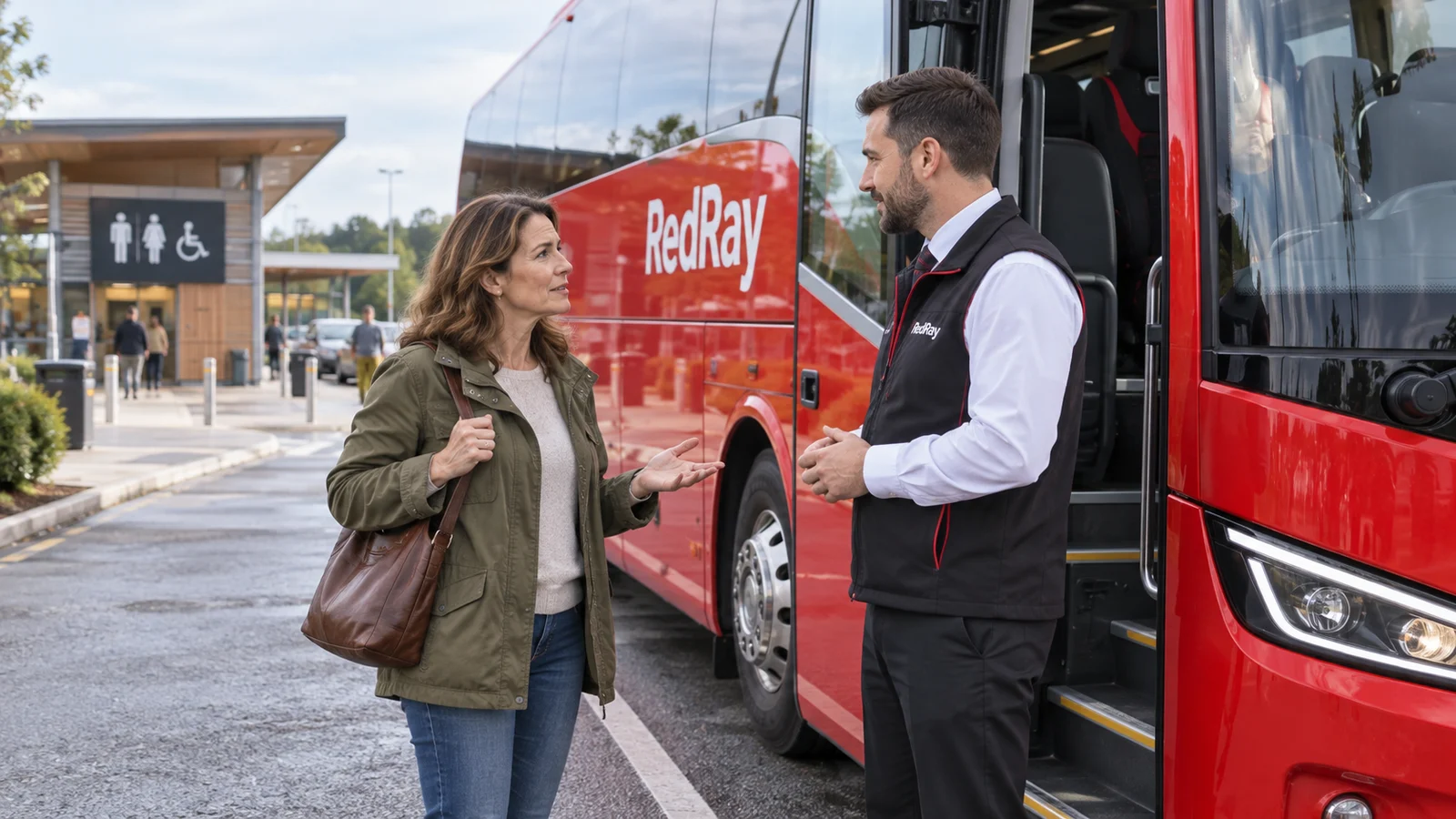
This article concerns an ordinary route section outside border control. A checkpoint has separate rules for leaving and moving around. Even with the coach doors open, do not apply the everyday arrangements below to a controlled area without proper permission.
Establish what a locked door means
Do not infer the cause from the handle. Someone may be using the toilet, access may be temporarily restricted for servicing or equipment may genuinely be faulty. These situations need different solutions. Ask a crew member whether it can be used now and, if not, whether restoration time is known. Do not demand the door be opened before checking it is unoccupied.
A short explanation is enough: “Could you tell me whether the toilet is temporarily closed or not working on this section? I need to plan a toilet stop.” This communicates an actual need without attributing motives to the crew. A neighbour saying “it is always locked here” does not replace an answer about today’s vehicle.
If the coach has not moved, ask before departure. While travelling, use a safe available way to contact another crew member or wait for an opportunity that does not distract the driver. Do not stand beside the driver’s workplace making a lengthy complaint. If urgent, say so: do not hide important information until the planned break.
Clarify the next break’s arrangements, not just its time
An intermediate scheduled stop may be only for boarding or alighting. It does not necessarily allow every passenger to leave and use nearby facilities. Ask for the next actual toilet stop: where it is planned, whether leaving is permitted and how to return. An estimated time is useful, but not an unchanging promise regardless of traffic.
Distinguish “there is a building” from “the toilet can currently be used”. The crew may lack current opening, maintenance or payment information for a site. If accessibility is essential, clarify it separately. Do not consider an ordinary stop suitable merely because it appears on a map.
- Will passengers be permitted to leave during this break?
- Where is the facility and how can you reach it without entering the carriageway?
- How will return time be communicated and where will the coach stand?
- Are the payment method and suitability for your needs known?
Do not demand a universal stop frequency: it depends on route, traffic and permitted stopping places. The practical aim is a clear solution for this section. If the answer remains uncertain, ask the crew to update you when a specific option emerges and explain why prolonged unknown waiting is unsuitable.
How to communicate your need without unnecessary details
You need not tell the whole coach your medical history initially. Clearly state whether you can wait until the named break or need help earlier. If necessary, ask to speak quietly or show a short prepared text in a language the crew understands. A companion may translate but should not decide for you how acceptable waiting is.
If an individual need was agreed before purchase, show the relevant message. It explains why access matters but does not automatically repair equipment. Ask for a suitable alternative now. If stairs or another obstacle make the proposed facility inaccessible, say so before the short break begins, not while approaching locked doors.
Do not solve the problem yourself by changing prescribed medication or deliberately avoiding drinks for the entire service. This article gives no medical advice or safe individual waiting duration. If your condition suddenly worsens, tell the crew emergency assistance is needed; discussion of a service complaint is secondary then.
What not to do with doors and equipment
Do not pick the lock with improvised objects, remove warnings or press unknown maintenance buttons. A forced-open door does not mean plumbing is usable. Do not pour in your own cleaning products or try to clear a blockage. Refer equipment condition to the responsible crew member.
Do not ask the coach to stop on a roadside where getting out is unsafe or stopping prohibited. You can and should request help with an urgent need; the responsible party must choose a safe place. Passengers should not open external doors themselves, leave while moving or organise a group exit without agreement.
Do not turn the issue into public filming of others. The fact of toilet unavailability, enquiry time and reply are enough to explain it. A photograph of someone leaving the room proves nothing about technical condition and invades privacy. If the crew permits recording a warning sign, exclude other people from the frame.
During the agreed toilet stop
Before getting out, establish how to find the coach again: it may stand among similar vehicles. Remember the location, agreed identifier and contact method, but do not publish the service number with personal documents. Take your passport, phone, ticket and required payment method. Do not leave them on the seat assuming a short break removes all risk.
Assess the queue as soon as you reach the facility. If it exceeds the agreed break, notify the crew through an available method rather than wait until the last minute. This does not oblige indefinite waiting, but lets you clarify a solution before departure. Do not send a companion to “just hold the door” instead of informing the responsible person.
After returning, confirm your presence as the crew instructed. If the onboard toilet remains unavailable, clarify the next stage rather than treat one stop as a solution for the whole remaining international journey. After a vehicle change, check actual conditions again: the previous cabin’s experience does not describe another coach’s equipment.
A realistic example of a solution
In an illustrative situation, a passenger sees a locked toilet soon after boarding. The crew explains equipment is unavailable until servicing and identifies a planned service-area stop. The passenger asks whether leaving is permitted, where the toilet is and how return time will be announced. If this does not meet an urgent need, they say so immediately and ask for another safe option rather than wait silently.
Success is not “the driver will sort everything out”, but a specific agreed action: an available facility at a permitted stop and a clear return to the service. This example sets no location or break time for a real carrier. Nor does it mean every coach has identical equipment or every change warrants the same compensation.
An enquiry after the journey: separate facts from expectations
If the toilet was advertised when purchasing, save evidence of your specific offer, not an arbitrary advertising photograph. Add the date, route, order number, unavailable section, crew-notification time and alternatives offered. Do not describe the whole service as “without a toilet” if access was restored: an accurate chronology supports substantive review.
State what you request: investigating a mismatch with the advertised service, explaining the cause or considering a specific claim under the terms and applicable rules. Equipment unavailability does not justify promising an automatic full ticket refund or all related expenses here. Keep the seller’s or carrier’s reply separately from operational travel messages.
Sources and related reading
Sources checked on 23 October 2026. The official description of FlixBus onboard services and that network’s conditions of carriage illustrate operator-specific sources, not a universal guarantee for every RedRay service. Check the actual carrier’s equipment and rules before purchase. Related reading covers hygiene at a short stop and toilet breaks with a child.
Questions and answers
Does a locked toilet mean it will not open for the rest of the journey?
No. The cause may be temporary or technical and needs clarification from the crew. Do not judge from the handle or open it yourself. If restoration time is unknown, separately ask about the nearest permitted toilet stop.
My ticket lists an intermediate stop. Can I rely on a toilet there?
Not necessarily: it may provide only boarding and alighting. Check permission to leave, an available facility and return time. Do not walk to a building beyond the stop before understanding how this fits continuation of the service.
Must I explain medical details to the whole coach?
No. Give the responsible crew member the minimum necessary: whether you can wait, whether it is urgent and what help is needed. Do this privately if possible. If your condition suddenly worsens, request urgent assistance instead of delaying for a formal break.
Should I photograph the onboard toilet queue for a complaint?
A chronology, crew reply and evidence of the advertised service are generally more useful. Do not film people in a private situation. Distinguish another person temporarily using the room from confirmed equipment unavailability.
Does a faulty toilet entitle me to an automatic ticket refund?
There is no universal promise. The purchased service, actual circumstances, proposed solution and applicable rules need consideration. Arranging a safe break immediately and later raising a service mismatch are separate tasks.