

The trip chat has a pinned bus-station address, but today a message gives another location. One email says departure at eight, another at nine. The organiser replies “check the pinned message”, while a companion shows a new screenshot without a source. Before changing your route to boarding, establish which information concerns your particular service and what the responsible party has confirmed.
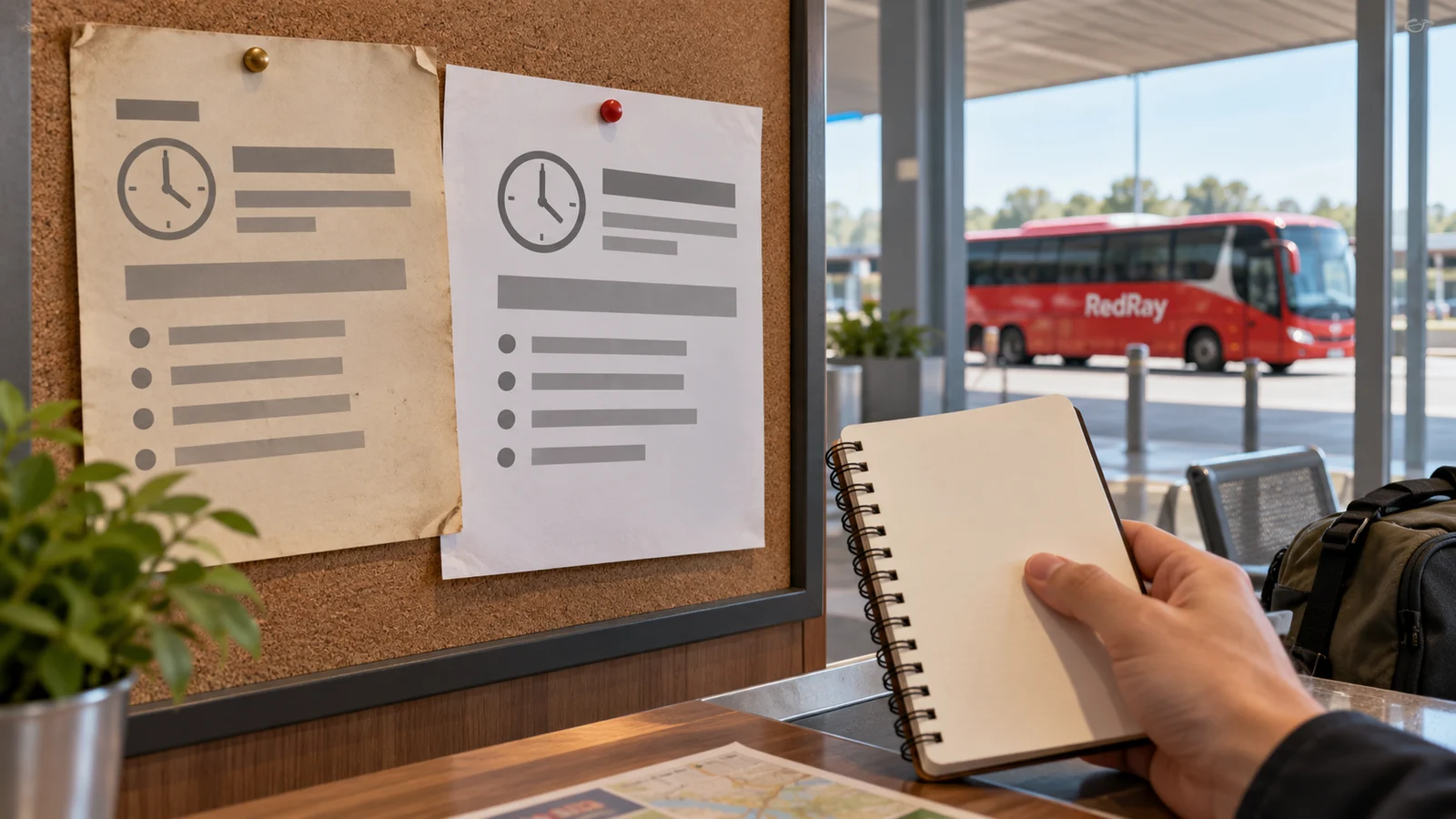
Pinning makes a post visible; it does not prove it is current. Likewise, the newest message is not automatically correct. It may be forwarded from another group, concern another date or contain only part of an update. Check the content, source and specific journey details.
Write down the actual contradiction
Instead of “everything is different”, note which fields disagree: date, time, address, landmark, platform or contact. Add each version’s source and receipt time. Do not reduce the difference to “rescheduled” if it is unclear whether the hour, day or boarding place changed. These are different changes with different consequences for your plan.
Check that every message concerns the same person, date and route. A shared chat may discuss several departures. One destination city does not make services identical. Use a booking or ticket number in a private support enquiry if available, but do not unnecessarily publish it in a large group.
Do not create your own “average version”: the old post’s time, new post’s address and neighbour’s platform. That combination may never have existed in the carrier’s plan. Obtain one agreed set of details or understand clearly which part still awaits confirmation.
Check where the new message came from
Look at who sent it and whether there is a direct official-channel link. A familiar logo, driver’s name or chat-admin status alone does not explain someone’s authority to change a departure. The group may contain an organiser who merely relays information. Ask to see the original confirmation without sharing other people’s personal data.
If the message contains a new phone number, do not use it as the sole source for verifying that same message. Also contact a number already known from your purchase or the official website. Otherwise, you may ask the person who sent the instruction whether it is genuine. That provides no independent confirmation.
Do not pay to “update the seat” or provide login codes merely because the service genuinely changed. A real organisational problem can make an outside demand more convincing. Establish whether any new operation is required, who performs it and how it is officially confirmed for your booking.
Ask the responsible party one specific question
Send a short description: “For the service on this date, I have two addresses: one in the pinned message and another in today’s update. Please confirm the current date, time and exact boarding location.” Add necessary material through a private channel. Ask them to state explicitly whether the previous message should no longer be used.
If the seller replies, clarify whether the information is agreed with the carrier. If the crew reply, tell the seller about document discrepancies if necessary. Do not demand that any one contact guarantee everything on every party’s behalf. Focus on the boarding procedure confirmed to you and the channel for subsequent updates.
Keep the answer with context, not just a cropped “yes”. Later, it should be clear which question was agreed, for which date and route. Do not edit screenshots to remove important caveats or uncertain parts. If an employee says the time is still being clarified, mark it that way in your plan.
How to organise the chat after clarification
The group manager can update the pinned post or add a clear note with the new confirmed version. Simply posting another long message at the bottom is not enough. A passenger opening the chat later should see that the old arrangements no longer apply and understand the source of the current update.
A group message needs only the date, time, address, landmark and verified contact method. Do not attach everyone’s tickets and passport details. If people have different boarding points, do not combine them into one address for simplicity. State whom each instruction concerns without unnecessary public lists of personal details.
Do not delete your correspondence history before the journey ends if it helps explain changes. Equally, do not leave two versions identically marked as current. An archive supports verification; working instructions support action. Separating these tasks reduces confusion without manually rewriting issued documents.
If you are already travelling to the old address
Stop somewhere safe and check confirmation before changing route. Do not ask a taxi driver or companion to hurry because of an unchecked screenshot. Tell the responsible party where you are and ask about current arrangements. Do not promise an exact arrival before assessing the actual journey to the agreed location.
If the new address is confirmed, check pedestrian access, the required entrance and reaching it with luggage. A map coordinate may lead to a closed side of the complex or a staff driveway. Clarify the practical boarding landmark, but do not try to enter unauthorised grounds to save a few minutes.
If the discrepancy puts you at risk of arriving late, report it promptly. Contact does not guarantee the bus will wait or a free replacement, but it gives the responsible party facts for a decision. Keep change messages and your chronology. Check financial consequences separately rather than assuming “the chat was wrong, so everything will be refunded”.
If different versions remain unresolved
Name the unresolved field directly. For example: “The date and address are confirmed, but the departure time differs in two replies.” This helps obtain a specific clarification rather than another general reminder. If sources conflict, ask them to coordinate instructions through the official channels for your purchase.
Do not vote in the chat on which address most people should use. The number who saved an old message does not determine the actual stop. Likewise, a friend’s confidence does not replace the required service’s details. Other passengers’ experience may suggest questions, but final actions must relate to the confirmed departure.
If safe continuation under this plan is impossible and you choose an alternative, establish the new purchase’s conditions and the previous one’s status. Do not ignore a current ticket assuming automatic cancellation. If necessary, prepare a separate enquiry with facts rather than judgments about employees’ character or unsubstantiated accusations.
A final check before leaving
- There is one confirmed date and time for the particular service.
- The address includes a clear landmark and permitted boarding approach.
- You know which old message should no longer be used.
- Companions have received the current instruction and understand whom it concerns.
For the next trip, check pinned posts the day before and before setting off under the service’s procedure. Saving one screenshot a month before departure is not enough. Know how changes are communicated and have access to a channel genuinely connected with your booking, not only an unofficial travellers’ group.
Questions and answers
Does a pinned post always take priority over new messages?
No. Pinning does not prove it is current. Compare the date, service, content and source, and obtain confirmed boarding arrangements through a responsible official contact.
Can I use the time from one message and address from another?
Do not assemble an unconfirmed combination. Ask for the date, time and location for your departure to be stated together and for an explanation of exactly what changed.
Can a new phone number in a message verify its authenticity?
Do not use it as the only confirmation. Also contact a channel already known from the purchase or seller’s or carrier’s official website.
If an incorrect post caused lateness, will every expense be refunded?
This cannot be promised in advance. Keep messages, confirmations and a factual chronology, and separately clarify how your situation will be considered.
Useful links
Check known contacts on the RedRay website. Practical material about messages and boarding is available in the RedRay blog. These instructions do not describe guaranteed features of a particular chat or a universal service-rescheduling procedure.