

A client meeting is a few days away, and a colleague hands you a case: fabric samples, demonstration products and a presentation set. The idea is to show everything and bring it back by the same bus route. The case is small, so you are tempted to call it ordinary personal luggage. But a bag’s shape does not determine the goods’ purpose or explain who is responsible for processing them.
Start with an agreed work assignment, not an extra-luggage purchase. Know exactly what you carry, who owns it, how the samples will be used and what will return. Separately check customs procedures and carriage on the particular bus. This article does not choose a procedure instead of the competent service or promise that “samples” creates an exemption.
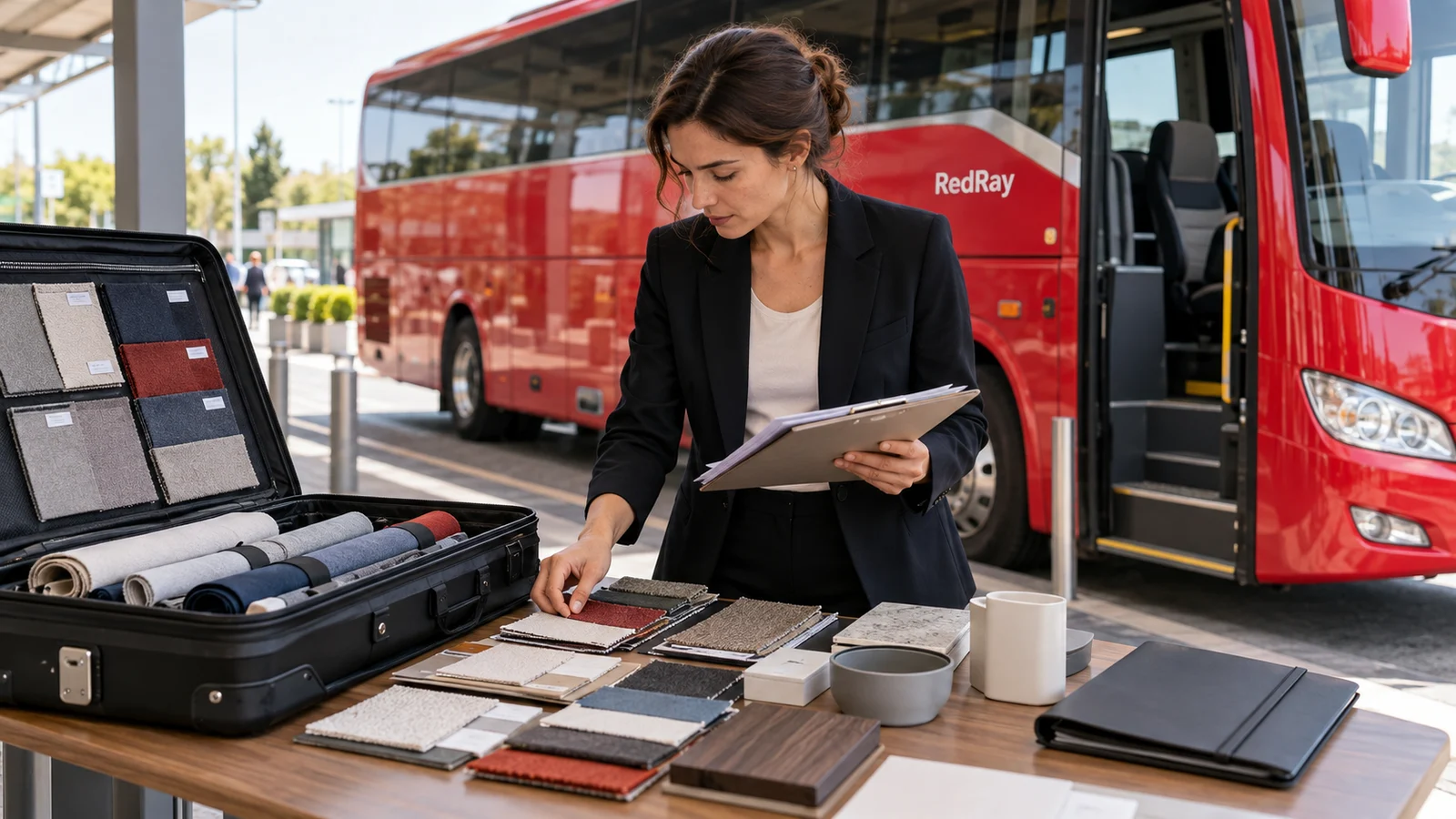
Define “show and return”
The same work description can conceal different operations. Some items are only demonstrated, others handed to visitors and others intended for sale or use in testing. Do not combine them as “meeting materials”. Before departure, ask the responsible company employee to divide the set by actual purpose. If someone has not decided whether a sample will stay with a client, that is an open question not to conceal.
Clarify the owner and who makes decisions during travel. A passenger may carry the case without authority to change how goods are used. You need an available contact for a specific question, not just a colleague’s number when they do not work weekends. Equally, do not leave every explanation to someone remote: you must know your luggage’s real contents, purpose and available documents.
Do not accept a closed box with “It is all ordinary stuff”. The list must match what is actually handed to you. If you cannot check the set or do not understand its properties, report this before finally agreeing to travel. A business instruction does not remove the need to know what crosses the border. Do not replace this check by signing an unclear description.
Compile a working inventory with the responsible party
For each group, record a clear name, quantity, identifying features, owner and planned action. If individual numbers or different models exist, do not reduce them to “equipment”. The description must allow document-to-item comparison without guessing. Take available values from real company materials rather than inventing a token amount because the sample is not intended for sale.
Identify who prepares required documents, checks their details and obtains procedural guidance. Do not leave this to the passenger in the final hour beside the bus. If an answer requires a professional or appropriate representative, involve them before buying the route. An employer’s letter may explain purpose, but must not be declared a replacement for every customs requirement.
Add each item’s packing location to the list. This helps find a sample for permitted presentation and later compare the returned set. A working list is not independently a declaration or proof of acceptance of a procedure. If a new model is added afterwards, recheck the list and earlier agreements. Do not add it only to a personal note while leaving the responsible party with old data.
Customs documentation depends on the operation, not the case’s name
Prepare a specific enquiry to customs authorities along the route: which samples, whose property, why they travel, how long they will be used and what will be taken back out. State the travel method: a scheduled-bus passenger with accompanied belongings. Do not omit another customs territory on the route merely because the meeting is further on. Checking concerns every relevant stage.
The official page from Ireland’s Revenue on ATA lists commercial samples among categories of use. This does not mean anything labelled “sample” is automatically processed or the document suits every country. Establish applicability to your operation, the proper holder and presentation procedures for your particular goods.
French Customs describes ATA and e-ATA, including representation and border actions. Check the current format and operation rather than assuming a photo of an old paper document replaces the required procedure. Establish who accesses current materials and what happens if the holder is not travelling personally. Do not give access to outside “helpers” in a bus chat.
Clarify the Ukrainian part through official State Customs Service materials and its competent channels. Do not disguise goods for business use as private gifts to avoid questions. Sources checked on 23 October 2026. This article deliberately sets no numerical “samples per passenger” limit, deadline or universal exemption from charges.
Check whether the chosen bus suits the set
After clarifying what needs processing, show the carrier its transport characteristics: packaging dimensions and weight, piece count and contents’ properties. Do not hide liquids, batteries, sharp elements or other features behind a general case name. An answer about permitted suitcase size does not establish acceptance of every substance or item inside.
A customs document and luggage agreement serve different tasks. The first creates no compartment space, and the second does not confirm lawful movement of goods. For example, FlixBus contractual rules must be read for the particular luggage and applicable section, not as general permission for business freight. Check another company’s conditions separately even if its tickets are sold alongside.
Establish compatibility of the required procedure with the actual service: crossing points, planned stops and ability to carry out actions in the appropriate place. Do not expect the driver to change route or take you to a customs office for an unagreed set. If the procedure and passenger journey do not fit, check another proper movement method before booking rather than asking to bypass requirements.
Do not silently change samples’ purpose at the meeting
A client may ask to keep an item “for a few days” or buy the demonstration set. Do not treat a verbal business agreement as an automatic amendment of processed conditions. Before handover, contact the responsible company party and establish further actions required under the procedure used. Being physically able to give someone a box does not mean every related issue is resolved.
If a sample is damaged, used differently from planned or replaced, record the facts for proper clarification. Do not substitute a similar item merely to match quantities. Compare the identified set itself, not fill the suitcase to its previous weight. Know the action procedure before returning rather than inventing an explanation at the next check.
Keep business materials private. Files intended for client demonstration may differ from transport characteristics needed by the carrier and full relevant information for customs. Do not publish commercial inventories, company documents or e-ATA access in the bus’s general chat. Equally, confidentiality does not justify withholding necessary information from a competent authority under its procedure.
Return starts with comparing the set
Before leaving the meeting location, check every group: what returns, what changed condition and what has a separate agreed decision. Compare available identifiers and required documents. If part is missing, clarify with the responsible party first rather than simply reducing quantities in a copied list. Describe actual changes properly without independently correcting official materials.
Establish which actions complete the procedure used and the deadline in your particular case. The passenger arriving home does not always mean every goods-related matter is closed. Retain issued confirmations and send them to the responsible company employee through the agreed channel. Do not finish with only “I brought everything back” if specific documents are needed.
For organising the business trip itself, use the article on bus business travel. Plan technical document access in advance too: required confirmation must not remain beneath belongings in the compartment. These practical steps help carry out a verified plan, but do not replace it.
Questions and answers
Can I call samples personal belongings because they are in my suitcase?
Explain the actual purpose and owner. Packaging and small size do not change goods’ business purpose or automatically determine their movement procedure.
My employer gave me a letter. Is that enough for any border?
Do not assume so. A letter may explain the assignment, but required documents and processing must be checked for the particular countries, goods and operation through competent channels.
Does ATA permit any samples without other checks?
No. Establish its applicability, proper completion and required actions. It also does not replace separate requirements for particular goods or agreement to their acceptance on the bus.
A client wants to keep one sample. Can I simply not bring it back?
First clarify the proper plan-change procedure with the responsible party and competent service. Do not change goods’ use silently or independently edit an already-processed inventory.
Must the driver help process company goods?
Do not assign an unagreed representative role to the crew. Identify those responsible for goods and documents before departure; bus coordination does not replace customs preparation.