

The ticket shows two addresses in EU countries, so a personal purchase can easily seem like ordinary luggage without a separate customs stage. Yet the actual bus may pass through Switzerland. You do not plan to get off or leave the goods there, but that intention does not answer questions about their transit. Check the belongings’ entire route, not only the first and final cities.
The key decision is whether actions required for your purchases fit the chosen scheduled service. Customs explains the applicable goods procedure; the carrier explains the actual route and carriage conditions. Do not assume the bus will use another crossing, wait for individual processing or accept any goods simply because you have a receipt. Establish this before paying for the ticket and a major purchase.
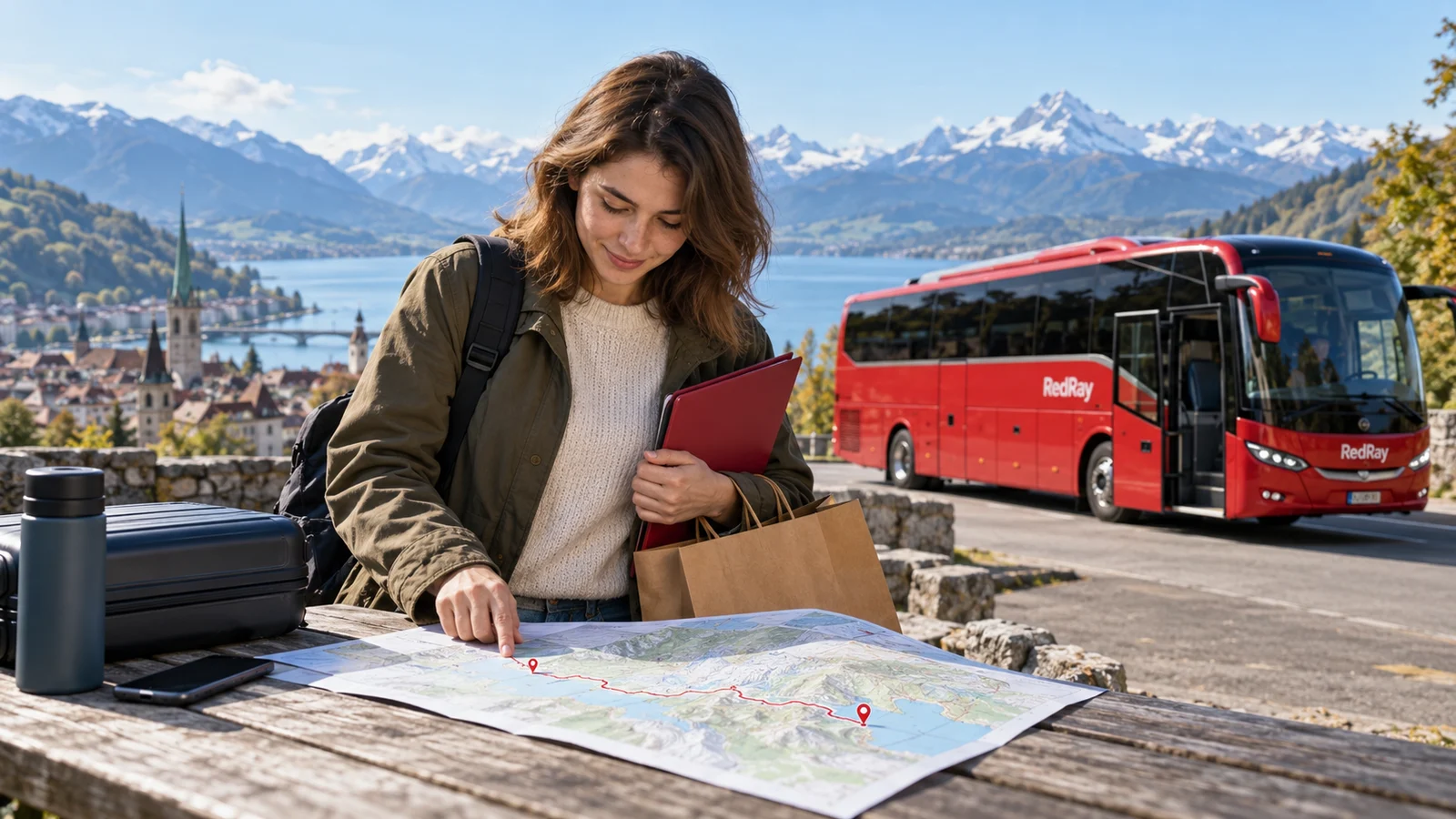
Find out where the bus actually crosses borders
Start with a specific departure enquiry: date, direction, provider and actual route. A general city-to-city map may show only an approximate line, and “direct bus” may mean no passenger connection, not no national borders. If the sales page does not make a Swiss section clear, request confirmation from the official seller or carrier. Do not conclude solely from a navigation app’s shortest route.
Planned entry and exit crossings also matter where they can be established for the service. Do not replace this information with the name of a city the bus passes. If the road may change, ask how passengers are notified and when the luggage plan needs rechecking. Mark inability to guarantee a crossing in advance as unresolved rather than inventing one for your customs enquiry.
Save the route with the clarification date. It will help a specific authority enquiry and another check before departure. The article on a transit-country change helps if the route changes, but checking is needed here even without changes: the Swiss section may have been planned from the start.
Do not confuse passenger movement with goods’ customs route
Switzerland’s participation in Schengen does not make it part of the EU customs union. This distinction is expressly explained in SEM’s official entry information. “I do not need another visa between these countries” therefore does not answer questions about purchases in a suitcase. Check personal documents and goods-movement rules separately rather than basing one decision on the other.
Equally, “I am not stopping in Switzerland” describes a passenger plan but does not remove actual movement of goods through its territory. Do not equate bus transit with waiting in a non-exit area of another transport type. Explicitly state in your enquiry that the purchase accompanies you on a scheduled bus and will leave the country after transit. This matters more than the informal phrase “Just passing through”.
Do not reach the opposite conclusion that every travel bag necessarily needs identical processing either. Official conditions distinguish item categories and provide exceptions. Establish applicability to your set rather than choosing the most alarming or convenient online post. This article does not determine goods’ status from a box photo or set a shared allowance for every bus passenger.
Describe purchases for an enquiry, not concealment
Separate ordinary items used while travelling from purchased goods and special contents. For a purchase, prepare the name, quantity, real value from available confirmation, owner and purpose. If there are several goods, do not call the whole set “souvenirs”. Particular categories may depend on properties, not only price, so describe them truthfully.
Keep complete receipts and available origin information. If confirmation is only in email, check it opens offline. Do not edit an amount or discard required markings to make an item appear an “old personal possession”. Packaging should protect and allow permitted presentation, not create a false history. Mixing purchases with used clothes does not replace checking rules.
If a suitcase holds several people’s belongings, establish the actual owners beforehand. Do not reassign them retrospectively after customs answers. Describe who is actually travelling and accompanying goods without treating all passengers as one notional person. Purchase documentation is covered in more detail in a separate article on receipts and luggage, but the import direction there differs.
Clarify transit procedures before bus boarding
FOCBS describes transit of private goods through Switzerland: in applicable cases, entry notification, possible security and subsequent proof of export matter. Exceptions and separate conditions exist. Do not apply one figure from the page to your whole set without checking categories. Restricted goods need separate consideration even when they will not remain in the country.
Formulate an enquiry to the competent channel: you are travelling on a particular bus, accompanying the described purchases, and plan entry and exit through stated crossings if confirmed. Ask what actions are needed before arrival and on site, which documents must be accessible and which conditions specifically concern subsequent exit. Do not seek a general “Everything is allowed” that does not describe your situation.
If your case requires security or transit confirmation, establish the official procedure, required payment method where a charge applies and next steps. Do not transfer money to a private “helper” promising to process everything for the bus. Retain issued documents and understand their purpose. Payment confirmation alone does not mean every condition is fulfilled or the matter completed.
Check compatibility with the scheduled service
Once the authority’s answer is clear, return to the carrier with a specific question, not a general request to “wait a little at the border”. Do actual crossings and service arrangements fit the required actions? Does the company accept this item under its conditions? If passenger participation or purchase access is needed, how can this properly be arranged? A favourable customs answer is not automatic transport agreement.
Check more than weight and size. The carrier may have contractual restrictions on goods and international carriage; relevant provisions appear, for example, in FlixBus conditions. These are not every bus’s rules and do not confirm acceptance of your purchase. You need an answer for the actual company and section, not a shop seller’s promise.
If the required crossing, time or processing method does not fit the service, do not plan to get off independently and catch up with the bus. Before buying, consider another route or another proper movement method. A higher ticket price alone does not guarantee suitability. Base a practical decision on combined confirmed conditions, not whichever option currently shows the shortest journey.
Do not lose track of the exit stage
During entry formalities, understand what your case requires on exit. If the applicable procedure requires proof of export and an appropriate crossing’s operation, check beforehand. Do not expect to obtain necessary confirmation anywhere after reaching the final city. The required document must be accessible, not in an inaccessible box under other suitcases.
Re-entering the EU is a separate stage. FOCBS advises contacting the relevant customs administrations beforehand about leaving and returning to the EU as well. Keep their explanations for the actual route countries. Do not declare a shop receipt and Swiss document a universal replacement for all confirmations. Do not invent an exemption beforehand simply because the goods were bought in an EU country.
If the route changes during travel, tell the crew the specific dependency in your plan and clarify next steps through competent channels. Do not require the driver to interpret customs conditions independently. After travel, retain the document sequence until every related issue is clarified. Sources checked on 23 October 2026; rules and particular crossing arrangements need rechecking before departure.
Questions and answers
I do not get off the bus in Switzerland. Must I still check purchases?
Yes. Establish applicable conditions for goods in transit. No sightseeing stop does not mean the item does not cross a customs territory. The particular procedure depends on its characteristics and circumstances.
Switzerland is in Schengen. Why are customs involved?
Schengen rules on movement of people and customs territory are different matters. Switzerland is outside the EU customs union; checking your passport plan does not replace checking purchases.
Can I ask the driver to choose a more convenient border for my processing?
Do not build a plan around that. You need the actual route and confirmed compatibility of required actions with the scheduled service. If they do not fit, check another option before paying.
Does an entry document guarantee automatic repayment of security?
Do not assume so. Establish applicable completion conditions, proof of export and the official procedure. Retain the document and perform required actions; this article promises no payment within a particular period.
Is a receipt enough when the bus re-enters the EU?
That depends on the actual goods and applicable procedure. Before travelling, ask relevant customs administrations about required confirmations rather than treating a receipt or Swiss processing as an answer to everything.