

Your plans changed: you reached the city another way, but want to return on the bus you booked. Your inbox contains a “return” confirmation, and it seems the return portion should remain valid. Yet the purchase’s name alone does not explain how the two departures were booked or which conditions apply to an unused first portion. Check this before your return date.
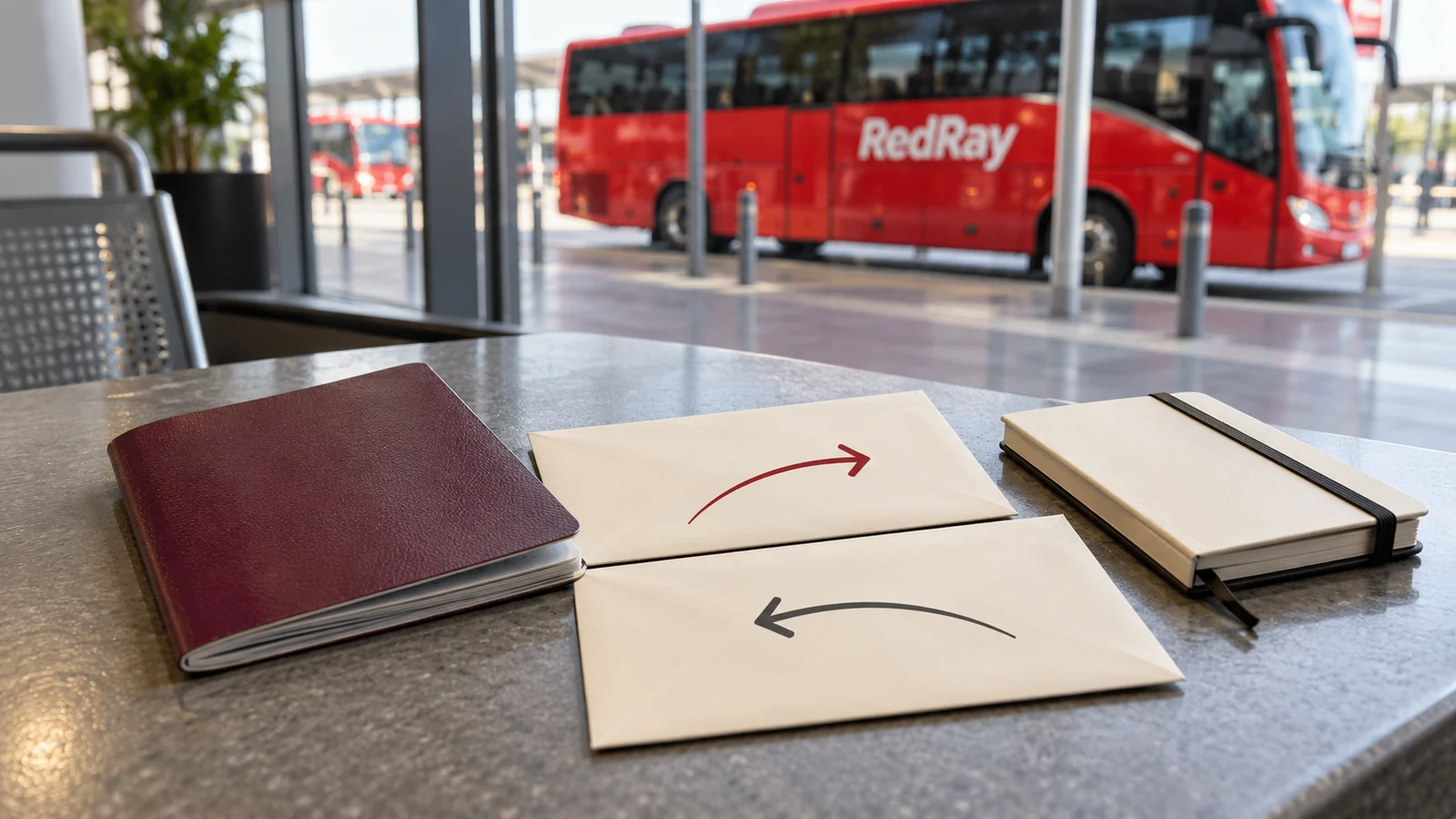
There is no universal rule for all bus tickets. Do not automatically apply airline rules or experience with another carrier to buses. First establish whether these are two independent tickets, a linked offer or another purchase format, then ask for confirmation of the particular return document’s status.
Start with the documents, not the fare’s name
Open the complete set and find documents for each direction. Note the date, cities, carrier, ticket number and booking number. Check for separate conditions on use, changes and cancelling one portion. One payment or email does not prove that sections are necessarily independent; different codes are likewise no substitute for reading the agreed conditions.
Check that these really are outward and return journeys, rather than two sections of one connecting journey. In the latter case, missing the first bus may mean you physically cannot reach the next boarding, even without any change to the document’s status. Here we consider the situation where you are already in the required city and want to use the return departure.
If conditions are available only in your account or through a purchase link, save the version applicable to your booking. Do not look only at advertising for “great-value return journeys”: that phrase may describe price without explaining partial use. A specific decision requires documents and confirmation from the party that sold the ticket.
What to ask the seller
Write: “The first journey on this booking was not used. Please confirm whether the return ticket for this date is valid, which document I should show for boarding and whether further action is required.” Add the booking number, passenger’s name and direction. If you formally cancelled the first portion, mention when you requested this and the response.
Do not ask to “cancel everything” if you need the return. Identify separately the portion you are giving up and the one you want to retain. Before a change is made, ask how it affects the rest of the purchase. This is especially important for multiple passengers or a linked fare offer.
Ask whether agreement with the carrier is needed and when you should expect an answer. Do not assume the person handling correspondence sees every status in real time. Acknowledging a request is not the same as confirming a valid return ticket. You need an answer with an outcome, not just “your request has been received”.
How three situations differ
If you simply did not turn up for the first departure, state that fact. Do not call it a ticket refund if you did not submit a request or receive a decision. If you cancelled the first portion through the seller, retain confirmation of the cancellation’s scope. If the carrier cancelled the service, distinguish its notification from your subsequent decisions about the return.
Each situation may require a different clarification process. Support therefore needs a timeline: what happened to the first bus, which documents were issued afterwards and whether the return journey changed. Do not send ten screenshots without explanation when three sentences and the relevant confirmations would suffice.
Do not infer full cancellation from one general word in your account if its scope is unclear. A status may refer to the booking, an individual document or a refund request. Ask for the exact status, date and boarding details of the return ticket you need.
If only one member of a group needs the return
Identify that person and their document separately. Another group member’s decision should not be treated as yours without checking how the purchase was arranged. Do not give someone else’s code to a passenger who decided to travel: this is not a way to preserve an unused seat. Changing a person and the validity of the return portion are separate questions for the seller.
When buyer and passenger are different people, agree who will speak to support. The seller may have its own procedure for verifying ownership of a booking. Do not ask an unrelated person to impersonate the buyer or share the buyer’s account passwords. Use an official way to obtain an answer without unnecessarily spreading access.
Check the contact for the passenger who will actually return. Even with a valid ticket, time or stop updates may go to another person involved in the purchase. You must confirm the document and ensure updates are received. A family arrangement is useful, but check it before departure day.
What to do if answers conflict
Ask for written clarification of the specific issue: validity, date, boarding point or required document. Do not randomly choose the more convenient answer. If seller and carrier disagree, send a short account of the discrepancy through official channels and ask them to agree the boarding procedure. Do not post full tickets publicly for people to vote on.
Keep original files and new messages separately. If a replacement is issued, establish which previous document should no longer be used. Do not combine an old code with new details. Show the issued or agreed set when boarding, not a self-edited version that seems logical.
If departure is close and you choose another way home, consider budget and safety. Keep related expenses and correspondence, but do not assume they are automatically reimbursable. Refund and complaint procedures depend on the purchase, circumstances and applicable rules. Handle practical travel arrangements separately from the financial claim.
Check before boarding for the return
If the person who bought your ticket received the answer, ask them to forward it with the current document. A verbal “they told me everything is fine” does not let you see the date, direction and scope of confirmation. Check the response’s content, not merely the fact that a conversation occurred.
- The status of the particular return ticket you need is confirmed.
- You know which document to present and which versions are retained only in the archive.
- The date, time, stop address and carrier have been checked again.
- The person actually travelling receives current notifications.
Arrive at the agreed boarding point in accordance with the service’s instructions. If earlier messages conflicted, keep a short confirmation that the issue was resolved to hand. Do not begin by demanding “you are obliged because I read it online”: show the specific document and ask about checks for your departure.
For future journeys, check the consequences of partial use before buying a linked offer. Ask a simple question: what happens to the return if the outward journey changes or does not take place? The answer helps compare not just the displayed price, but how well the conditions match the flexibility of your plan.
Questions and answers
Does an unused outward journey always cancel the return bus ticket?
There is no universal rule. Check how the specific purchase was booked and its conditions, and obtain confirmation of the return document’s status.
Do two QR codes mean the tickets are independent?
Two codes alone are not enough to draw that conclusion. Check the conditions, details of each portion and procedure confirmed by the seller or carrier.
How do I request a refund for only the first portion?
Clearly identify the section and passenger and ask how any change affects the return before it is made. Do not write “cancel everything” if you need the other portion.
Can I travel using the old return file after an exchange?
Only if the responsible party confirms that this is the document valid for boarding. If a new set was issued, clarify which previous documents should no longer be used.
Useful links
Check the conditions of your specific purchase and contacts on the RedRay website. Find more advice about documents in the RedRay blog. This material does not promise refunds or apply another form of transport’s rules to a bus journey.