

Two highlighted rectangles close together on a plan do not necessarily mean adjacent seats in the same pair. A central aisle may separate them, while different rows or cabin sections may appear close on screen. If buying tickets with a child, partner or someone you assist, clarify this distinction before paying.
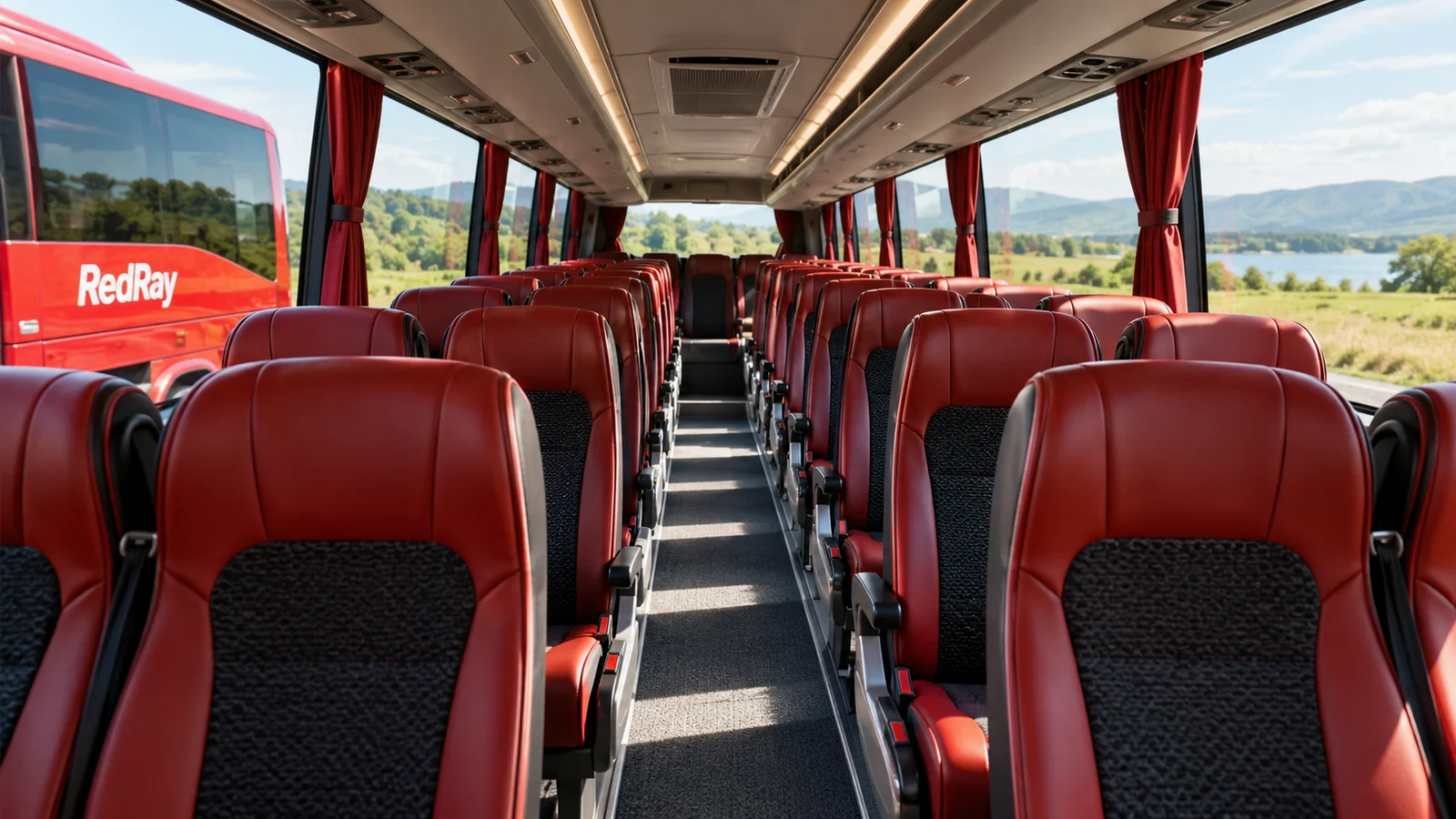
A plan helps selection and orientation, but you need to understand its symbols. Numbering and interface appearance are not universal across buses. Do not apply a rule from a previous journey to a new service merely because numbers or colours look similar. Below we check seats’ relative positions, not a general ranking of the “best seat”.
Define what “together” means for you
One pair may be happy in the same row across the aisle. Another needs two seats in one pair to help a child or talk quietly. Someone else needs the seat immediately in front of a companion. Without defining the need, “yes, you are together” may sound correct without solving your actual problem.
Make the request specific: “We need two seats in one pair, with no aisle between them” or “we can sit in the same row on opposite sides”. Do not explain only by a screenshot’s colour. After zooming or changing interface language, colour may not help, while numbers and a precise description remain clear.
If several people are involved, agree positions within the group before payment. Do not decide for another adult that an across-aisle seat is as convenient as one in the same pair. For a family, clarify accompaniment arrangements and actual needs without promising any selection automatically meets a particular carrier’s requirements.
Find reference points on the plan
Look for the front of the cabin, direction of travel, doors, aisle and stairs if shown. Do not begin only by finding two consecutive numbers. If orientation is unclear, even correctly read numbers may be assigned mentally to the wrong bus side or neighbouring row.
Enlarge the plan using an available method and read its symbol explanations. Do not assume a blank strip is necessarily an empty seat rather than an aisle or structural gap. Likewise, rows close together on screen do not guarantee physical proximity if the plan is schematic. Important relative positions need confirmation through clear information.
If the plan has two blocks, establish what they mean. They may be different sections or decks depending on the particular image. Do not buy seats in matching positions in two blocks assuming they are neighbours. Ask for an explanation if the legend is ambiguous.
Do not rely solely on consecutive numbers
Adjacent seats on a familiar vehicle may have had consecutive numbers, but this does not establish a rule for every plan. Numbers identify a selection rather than independently reveal cabin geometry. Compare them with positions on the plan and the official explanation for the required service.
Do not trust a random search image unless linked to your journey. Even a similar model may have another configuration or display method. There is no need to guess the exact bus from its exterior in a photograph. What matters for buying is which configuration and seat-selection conditions the seller or carrier confirms.
If the service offers no confirmed selection of a specific seat, do not treat an informational image as reservation of two seats. Clarify how seats are assigned on this departure and whether your need can be agreed before paying. A preference and a guaranteed service are different and should be named separately.
How to ask support
Give the date, route, carrier or available service identifier and the two selected numbers. Ask: “Are these seats one pair, or is there an aisle between them? Does the plan match the configuration for which seats are currently being sold?” If this concerns assisting a companion, briefly describe the required position without unnecessary personal detail.
A screenshot can help, but check it contains no ticket code, payment details or other people’s information. Before purchase, identifying the service and positions is enough. Do not send an account password so an employee can “look themselves”. Official support should explain a permitted clarification method without giving outsiders access.
Request an answer specifically about physical positioning. “Both seats are available” does not mean they are one pair. “Adjacent numbers” can also leave uncertainty. If a particular arrangement is needed, do not finish checking until you understand what is confirmed and what remains only your preference.
What to check after selection and before payment
Read the purchase summary for every passenger: date, route, name and selected seats if booked. Do not rely on the plan’s state before changing passenger count or switching tabs. Returning to a previous screen may display another selection, so check the actual summary rather than your memory.
Clarify whether seat selection is included or booked separately if this matters to your purchase. Do not infer conditions from a seat’s colour or an amount on a neighbouring line. Read the particular service’s conditions before paying. Keep confirmation of exactly what you ordered without assuming guarantees absent from the conditions.
If you cannot establish the required positions, compare other confirmed options. Do not buy at random expecting someone in the cabin will definitely swap. Other people may also have selected and paid for seats for specific reasons. Your unchecked expectation does not oblige them to move.
If you discover an aisle between you at boarding
First check numbers and the actual row with the crew. Do not occupy arbitrary seats to be physically together. They may belong to other passengers, including people boarding at the next stop. Explain the arrangement you expected and any confirmation you have.
If a child or another companion needs help, state the specific need and ask staff to check permitted options. Do not resolve it by standing in the aisle during travel or sitting without proper use of provided safety equipment. A practical solution must be agreed and suitable for the actual cabin.
A voluntary seat exchange requires the people involved to consent and compliance with the carrier’s procedure. Do not pressure a passenger or conceal a change from the crew when approval is required. If a confirmed paid service was not provided, separately collect material for an enquiry. This does not automatically authorise you to rearrange seating yourself.
How to account for a possible vehicle change
If informed of a bus change, clarify important positioning again. The earlier plan may not describe the actual vehicle. Ask how your seats have been reassigned and which needs can be accommodated. Do not consider any similar-numbered pair a direct equivalent of the old plan without confirmation.
Keep the original document, change message and seating reply. Do not put new numbers into the PDF yourself. If a replacement is issued, establish which document to show at boarding. For a later enquiry, distinguish the vehicle change itself from a specific mismatch in paid or agreed seating.
The best preparation is knowing your need and checking it in precise words. “No aisle between seats”, “in the same row” and “on the same deck” are different conditions. The more clearly they are stated before buying, the less chance that you and a responsible employee mean different things by “together” on departure day.
Questions and answers
Do two consecutive numbers always mean one pair of seats?
No. Compare numbering with the plan and the particular service’s explanation. Do not transfer the arrangement from a previous bus to another without checking.
Why can nearby rectangles on a plan be across an aisle?
A plan is schematic, and you need to read its scale and symbols. Find the aisle, direction of travel and legend, and ask about the specific numbers if uncertain.
Can I buy at random and ask others to swap?
Do not rely on this as a guaranteed plan. Other people may have their own reasons to remain in their seats; any permitted reseating should be agreed.
Should I clarify positions again after the bus changes?
Yes, if a particular adjacent arrangement matters. Ask how seats were reassigned and which document is now current for boarding, without manually editing the ticket.
Useful links
Check the selected service’s conditions on the RedRay website, and further preparation advice in the RedRay blog. This article does not establish one numbering system or promise a particular configuration for every bus.