

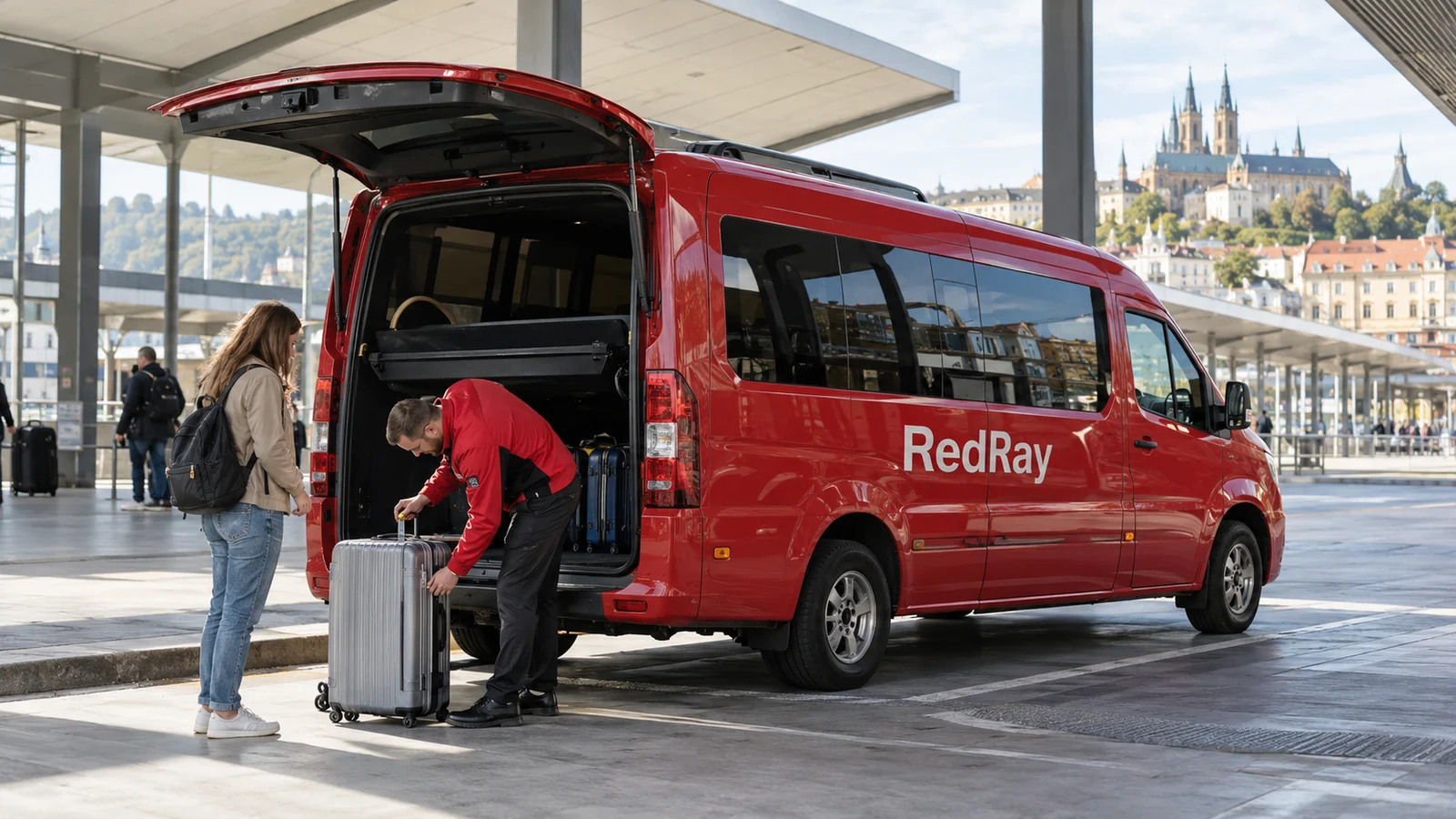
In brief: a bus service is not necessarily a large touring coach with a spacious luggage hold. For a minibus, check the vehicle, baggage arrangements, equipment and boarding point before paying. Rely on confirmed service conditions, not a promotional photograph.
What differs for the passenger?
Cabin layout, aisle width, doors and storage affect boarding with a suitcase, travelling with children and mobility aids. Seat count alone does not describe comfort: specific arrangements and carriage rules matter.
A smaller vehicle is not automatically faster or less reliable. Journey time depends on the route, stops, traffic and border checks. Nor should you assume large-coach facilities: confirm toilets, sockets and separate baggage storage individually.
Check the vehicle before payment
Look for the vehicle type, seat plan and equipment in the description. If unclear, ask: “Does this departure use a minibus? How are seats arranged and where will a large suitcase go?” Include the date and route to obtain a service-specific answer.
A brand in a photograph does not confirm the assigned vehicle. Carriers may use different vehicles or make technical substitutions. If a feature is essential, ask whether it is confirmed for your booking and what happens if the vehicle changes.
A suitcase: size matters as well as weight
Provide dimensions, weight and the number of bags. “Standard luggage” does not describe a rigid case, sports equipment or pushchair. Ask where items will go and whether approval or an extra charge is required.
Do not plan to use the aisle, doorway or an apparently empty seat: it may be booked from a later stop. Keep documents and travel essentials accessible in an approved place. Hand over large baggage as instructed and check it is loaded into the correct vehicle.
Seating on a long journey
Match the seat plan to the vehicle. A seat number alone does not show distance from the door or a wheel arch. For reduced mobility, ask about step height, doorway width and boarding assistance.
Pack hand luggage so essentials are accessible without repeatedly moving through rows. A large backpack on your lap can be uncomfortable; check its size and storage. Report a faulty belt or seat before departure and ask the crew to resolve it.
Toilets, air conditioning and charging
Check each important facility separately. There may be no toilet, and sockets or connectors may differ. Charge your phone and bring an approved backup power supply. Special needs require a specific answer rather than a general “comfort” label.
Ask about breaks and how to request an additional stop. Break intervals cannot be assumed in all road conditions. If access to a toilet or particular temperature conditions is essential, consider this when choosing the service.
Identify the right minibus
Several similar vehicles may be waiting. Confirm the route, date and booking with the service representative. Colour or a windscreen sign alone is insufficient. Do not board or hand over baggage until the details match.
Keep your documents with you. If a transfer to a larger coach occurs, establish whether it is planned and who moves the luggage. A vehicle change is not necessarily the end of the journey.
When another service is preferable
If essential baggage, assistance or equipment is unconfirmed, choose a suitable alternative before buying. An available ticket does not mean every vehicle suits every passenger.
Compare the total cost, including agreed baggage charges, and confirmed features. Do not pay more just for a large-coach photograph. Keep correspondence to document any difference between promised and actual conditions.
Pushchairs and mobility equipment
Provide folded dimensions and assistance needs for pushchairs, walking frames and other equipment. Explain how an item folds, is carried and should be stored. Previous approval on a large coach does not establish accessibility on this minibus.
If equipment must be used in the cabin during travel, discuss this separately from storage. Space for a folded item does not confirm its use while moving. Obtain clear arrangements before payment or look for a suitable alternative.
Take breaks without rushing
If many passengers share a narrow exit, wait for a safe opportunity. Keep essentials accessible and confirm the break duration and where the vehicle will wait.
Do not leave shopping in the aisle after returning. Additional bags must fit approved hand luggage arrangements. A bulky shopping bag can obstruct others as much as an unapproved suitcase.
Keep important confirmations
A baggage or accessibility confirmation must refer to your departure and ticket. If arrangements change, check the available solution before giving belongings to the crew.
Explain the location, route and storage arrangements beforehand to someone travelling by minibus for the first time. If steps or a narrow aisle are difficult, do not choose a seat based on generic internet advice: ask about actual accessibility and assistance at the relevant stops.
Questions and answers
Does a minibus always clear the border faster?
No. Queues, procedures and passenger documents affect timing; vehicle type does not guarantee faster checks.
Can I bring a large suitcase?
Give its dimensions and weight and obtain carrier confirmation. Do not assume another service's allowance applies.
Does a seat plan guarantee the vehicle will not change?
Not necessarily. Check substitution rules and how your seat will be confirmed if another vehicle arrives.
What if the vehicle differs from the description?
Document the difference and ask the carrier and seller about available options. Check the effect on your ticket before starting a refund.