

You arrive with friends, family or an organised group, and a dispatcher directs some people to an additional coach. Even if both vehicles carry the same name, do not rush to distribute suitcases on a fellow passenger’s instructions. First establish who travels with whom, which document applies to each person and where the group will meet again.
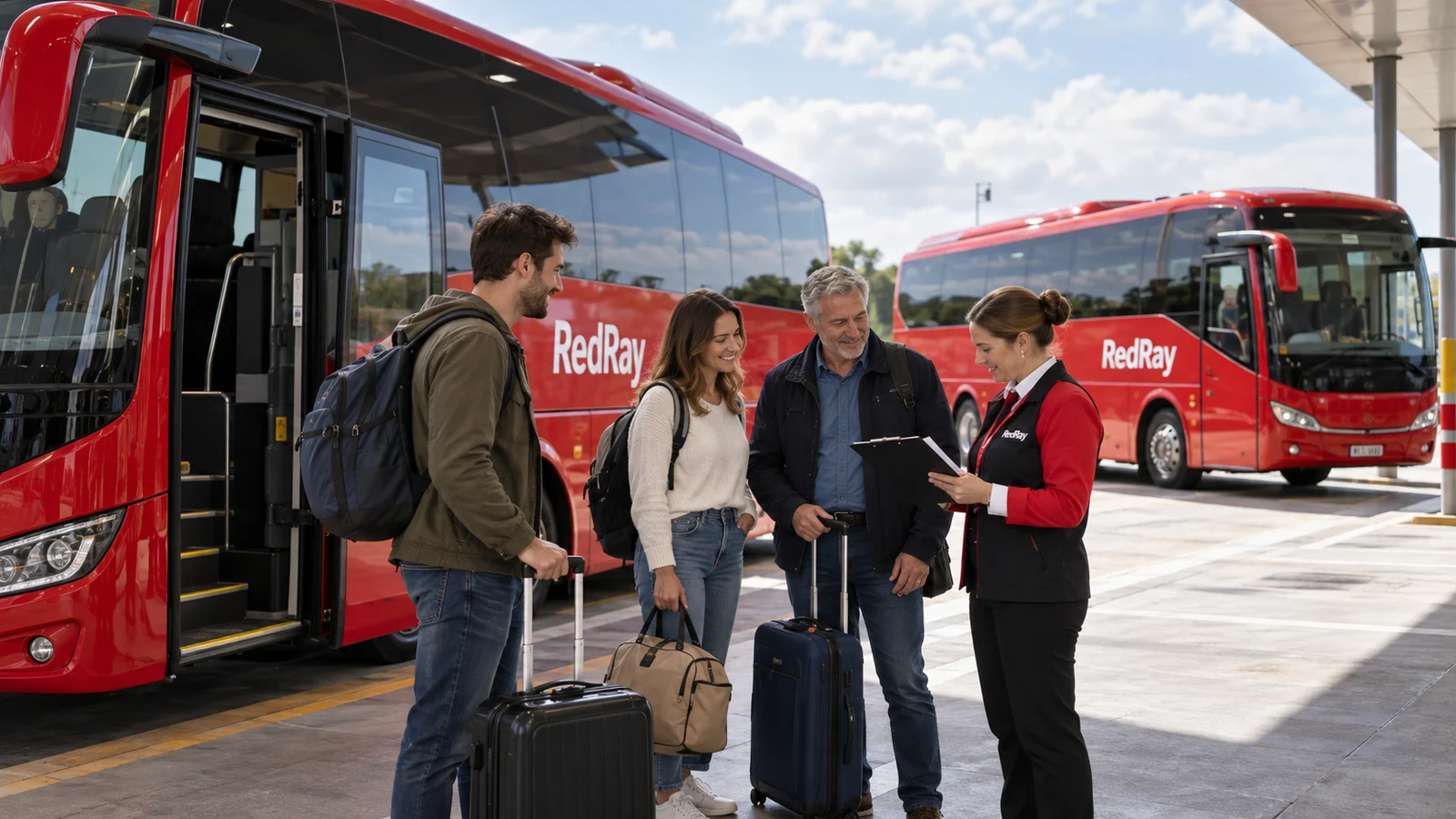
This is not an ordinary bus replacement for all passengers or relatives seated on different decks of one coach. Two vehicles may have different stops, independent delays and separate border checks. You need an individual plan that works even when the coaches no longer stand together.
Clarify the allocation before loading belongings
Ask the responsible employee whether transport changes for only some passengers or whether this is a temporary feeder to the main service. In the latter case, establish the exact next boarding point and how it is confirmed. Do not call a smaller vehicle a “transfer” without being told: it may operate an independent route.
Give every participant’s booking references and ask who is assigned to each coach. Instructions should come from the carrier’s representative, not someone merely pointing to an open door. For a large group, one adult may coordinate questions, but every adult passenger should know their own confirmation.
Until allocation is settled, keep group luggage together in an agreed safe place without blocking platforms or doors. Do not create two independent queues of people who do not know which vehicle carries their belongings. If some suitcases are already loaded, tell the crews allocation needs checking before departure rather than opening holds yourself.
Identify who needs to travel together
First identify children and their accompanying adults, and people who need another participant’s assistance. “We are a family” is not enough: explain exactly who must remain together throughout the journey. Do not leave a child on another coach merely because both supposedly travel one behind the other.
Assistance may concern orientation, communication or daily activities, not only climbing steps. Describe the action needed without broadcasting diagnoses to the queue. Ask the carrier for an arrangement preserving that support. If an employee cannot decide, contact the responsible dispatcher before final rebooking.
Splitting independent adults may be acceptable if they understand and agree to the route. However, nobody should end up on a separate vehicle without their documents, money or necessary communication device. A shared ticket purchase does not automatically authorise one member to represent everyone in every change of conditions.
Assign a specific bus to each passenger
Match each person to the actual vehicle. Establish how to identify it: service number, crew-provided details, platform and carrier. Colour alone or “the big bus on the left” is unreliable when parking changes or another coach arrives. Do not publish a group list containing full personal details in an open chat.
- Identify the current ticket and agreed coach for every participant.
- Check whether special boarding conditions and necessary aids are retained.
- Establish whether a new document is needed and what to show at the next check.
- If a seat number is displayed, compare it with the actual layout rather than moving other people yourself.
If the dispatcher only announces the new vehicle orally, ask for confirmation through an accessible channel. This helps more than a potential complaint: the second crew needs to see the agreed change. If employees give conflicting instructions, ask them to reconcile information rather than carry a suitcase randomly between doors.
Redistribute shared belongings according to people’s needs
Before separating, check that everyone’s passports are not in one folder with someone travelling on the other bus. At border checks, required documents must be accessible to the relevant passenger or proper accompanying person. Do not plan to pass them through windows between vehicles in the control area: coaches may end up in different queues and halls.
Distribute chargers, keys, communication devices, essential personal medicines and children’s items. For a shared suitcase, decide who collects it at arrival and what the other subgroup needs to remove now. Luggage in the first vehicle must not make the second subgroup dependent on simultaneous arrival.
Ask how suitcases are recorded on each bus and check any confirmations provided. A tag should help identify belongings, not expose unnecessary address information. Do not move someone else’s bag merely because it is the same colour; its owner or responsible person should confirm the transfer.
An illustrative example: four adults share a large suitcase and a first-aid kit. If two take a different coach, separate necessary personal items and agree who collects the suitcase. This does not permit changing the allowed luggage arrangement without checking: actual limits and safe placement must be clarified with each crew.
Compare routes, not only the destination city
Ask to check both vehicles’ exact arrival stops, intermediate stops and any connection. The same city name does not mean the same platform. If participants must continue together, understand how they will reach their shared onward bus and whether the connection remains possible.
Do not treat a promise to travel in convoy as a guarantee of simultaneous border crossing. Each vehicle follows its own procedures, and check times may differ. Ask whether the border route changes and whether anyone faces a new transit country. If this affects a passenger’s documents, clarify it before agreeing to the change.
Do not demand that a driver wait for the other coach somewhere prohibited or attempt to switch coaches at the border yourself. Tell the crew you need the group reunited, but responsible services determine movement and control rules. A friendly passenger agreement does not permit movement around a controlled area.
Agree contact and meeting arrangements that withstand delays
Choose an adult contact in each independent subgroup and save each other’s numbers outside a single messenger. “We boarded the agreed bus and have our belongings” is more useful than continuously broadcasting every event. Do not share passport photographs or tickets with usable codes in the group chat.
Choose a reunion point using an actual address and waiting conditions. If one subgroup arrives much earlier, it should know where to wait safely and how to retain access to accommodation. Do not make the only key-holder unreachable by others. Tell the host or person meeting you about two independent arrivals.
Agree what to do if contact is lost: who approaches official support, which service details they give and which meeting point remains valid. This is not a reason to delay reporting a vulnerable person missing if there are grounds for concern. Independent adults need a realistic plan; necessary accompaniment must remain within the actual vehicle.
If the proposed split is unsuitable
Clearly identify the unresolved condition: a child lacks accompaniment, required assistance is unavailable or the other coach does not serve the confirmed stop. Ask for an acceptable option and its conditions. Do not describe it simply as reluctance to sit separately when essential support or different transport is actually at stake.
Do not rush to cancel the whole group using an ordinary button before clarifying the reason and proposed solution. Keep booking confirmations and the company’s reply. A dispute must be assessed under specific transport conditions and applicable law; a shared booking alone does not prove the remedy due in every situation.
To distinguish ordinary seating arrangements, see the article about family seats on different decks. A particular network’s rules can be checked in the FlixBus conditions of carriage, while general assistance grounds are on Your Europe’s page for passengers with disabilities or reduced mobility. This does not mean every shared booking guarantees one vehicle. Sources checked on 23 October 2026; verify your particular service’s conditions before travelling.
Questions and answers
Both buses go to the same city. Can we simply meet after getting off?
First compare exact stops and access to the agreed meeting point. Coaches may arrive in different parts of the city at different times. Each independent subgroup needs its own belongings and onward plan.
Is leaving everyone’s passports with the organiser enough if they travel ahead?
Do not plan a border journey so a passenger cannot present their document because it is on another coach. Before allocation, check that required originals are accessible to every passenger and proper accompanying person.
Can a new acquaintance watch my child until the next stop?
Do not replace proper essential accompaniment with a casual arrangement. Explain who needs to stay together and agree a suitable solution before departure. Two buses travelling nearby do not replace accompaniment in the same vehicle.
My suitcase was loaded on the other coach. Should I retrieve it myself?
Tell responsible staff from both vehicles and agree retrieval or transfer. Do not open a luggage hold without permission or move others’ belongings. Check who collects the suitcase at the destination if it travels separately.
If the buses face different delays, can I switch to the other one at the border?
Moving independently is not an acceptable reunion method. Tell the crew your need and follow control-service instructions. The meeting plan should allow for separate border processing without such transfers between vehicles.