

Friends are travelling on one service but have different destinations. One suitcase is shared, some belongings are in the bag of someone continuing, and at an intermediate stop you suddenly discover that necessary documents are in another compartment. These problems are easier to prevent when packing and loading than to resolve beside the bus with suitcases open.
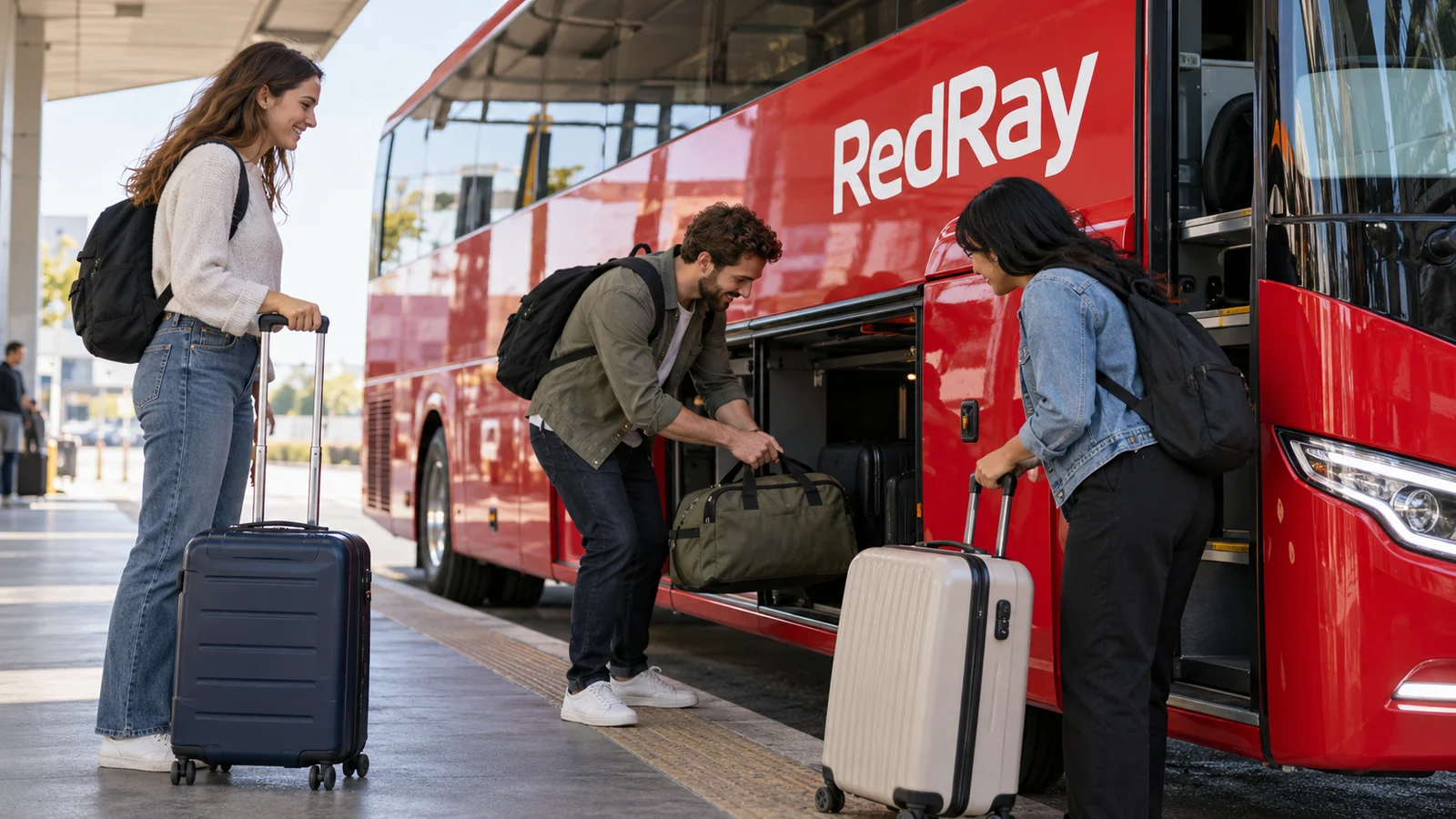
This concerns a group with different agreed drop-off points, not an unauthorised decision to get off earlier than stated on your ticket. Everyone must first check their agreed stop. If plans changed after purchase, agree that separately with the carrier before loading; a verbal arrangement between friends is no substitute.
Break the route down by passenger
Make a simple private list: who is travelling, where they get off and which bags they need to collect. Passport numbers or full ticket copies in an open spreadsheet are unnecessary. Clear labels and verified destinations are sufficient. Everyone must know their own part of the plan rather than relying entirely on the organiser.
Do not use informal descriptions such as “the centre” or “by the shop” when the document names a particular stop. A city may have several stops, and luggage collection depends on the actual route. If two friends leave in the same city but at different stops, those are two separate events for packing purposes.
After a route or drop-off change notification, check the list again. Do not change luggage order based only on an unverified group message. Establish whether the update genuinely concerns your service and the relevant passenger. The earlier different destinations are clear, the easier it is for the crew to assess loading arrangements.
Why a shared suitcase creates additional dependencies
Someone leaving earlier needs their own complete set of belongings. A shared suitcase that must be opened at the platform increases the risk of forgetting or mixing things up. Separate items at home where possible. Otherwise, decide who takes the suitcase itself and what will be moved beforehand into a separate bag of permitted size.
Do not leave your documents, money, accommodation keys or important contacts in the bag of a companion travelling further. You may not have quick access when leaving. An organiser’s backup document does not replace your proper set. Prepare separately anything needed immediately on arrival and keep it under your control.
On an international journey, shared packing must not conceal ownership or what is being carried. Do not agree to call someone else’s contents your own merely for convenience. If explanations or documents are required for an item, its owner must be ready to provide truthful information under the established procedure. Packing does not remove that requirement.
Agree loading with the crew
When boarding, briefly explain that some of the group leave earlier and name their stops. Show which bags belong to those passengers. Do not move other people’s suitcases yourself to establish a convenient order. Hold placement takes account of actual space, safety and arrangements for the whole service.
A useful explanation is: “These two suitcases are coming off at this stop; this one stays until the terminus. Please tell us how to hand them over correctly for loading.” If tags or receipts are used, check each bag matches its receipt. Do not keep every receipt with one passenger without a clear handover plan for those leaving earlier.
Do not promise the group that bags will necessarily go behind a particular door or in a particular order. Arrangements may differ after a vehicle replacement or intermediate stops. Your task is to communicate the need clearly and follow the agreed procedure, not manage the hold instead of the crew. Personal markings help identify items but do not authorise you to open a compartment.
What to do before approaching the stop
Collect hand luggage beforehand when safe. Check the seat pocket, charger, overhead rack and personal documents. Ask companions not to begin passing things across several rows as the bus stops. A short essentials list is better than searching for one item among the group’s different bags.
If service instructions require a reminder about your stop, give it in the prescribed way. Do not distract the driver during a difficult manoeuvre or stand on the steps early with a large bag. Wait for a safe stop and instructions to leave. Rushing saves no time when a passenger blocks the aisle and forces others to help carry unpacked belongings.
Agree who helps on the platform and who stays on board. Anyone getting off only to say goodbye must understand how to return and must not wander away without permission. For someone continuing, a temporary exit should not create a risk of missing departure because of a handover or conversation.
During your brief preparations, also check shared items: charging cables, snack bags and travel organisers. It is easy to automatically return them to the wrong person. Decide what the departing passenger needs immediately and what stays with the group until the terminus. Resolve this before stopping rather than exchanging items through the door at the last second.
Collecting suitcases at the stop
Collect only your luggage following the crew’s procedure. Compare its external marking and receipt, where used. Group members may have identical suitcases, so “it is ours” does not explain which one continues. Check each bag before taking it far from the bus or handing it to someone meeting you.
If the wrong suitcase is unloaded, calmly point out the mismatch immediately. Do not open it to search for your T-shirt or arrange an exchange off to the side. The responsible staff member must understand which bag remains in the hold. Holding someone else’s belongings does not mean yours can easily be found later.
Do not leave belongings obstructing the platform or spread contents on the road. If repacking is unavoidable, ask where it can be done safely and whether it requires another departure arrangement. The driver should not discover a lengthy operation only after the group has opened three suitcases beside the luggage doors.
If some belongings continue without you
Notify the crew or official support immediately, identifying the particular bag and its last known location. Do not ask a friend to open the hold while moving or at an unagreed stop. Establish whether the item is actually on the bus, who controls it and how proper collection can be arranged under available conditions.
If a companion still has your keys or document, explain separately without exposing unnecessary information in a public chat. Do not assume any later bus operated by the carrier will accept the item as a parcel. Sending belongings separately from a passenger requires checking a proper method, not a casual promise to “give it to a driver we know”.
After leaving, briefly confirm to the group that people and bags are in place. If you discover an error, record the time and circumstances and use known contacts. Do not distribute everyone’s full tickets while trying to establish suitcase ownership. Your travel details and a description of the particular item are usually enough to begin.
Questions and answers
Can we keep a shared suitcase and divide its contents when getting off?
It is better to prepare separate sets before travelling. If impossible, agree beforehand who takes the suitcase and move essentials without rushing or obstructing the stop.
Who determines loading order for different stops?
Tell the crew which items are coming off where and follow the agreed arrangement. Do not move others’ suitcases or open the hold yourself.
Where should the group keep luggage receipts?
If receipts are used, each departing passenger must have the required confirmation for their belongings. Check bags and receipts match before the journey begins.
What if my bag continues with my friends?
Tell the responsible staff member immediately and establish its location and a proper collection method. Do not arrange unauthorised compartment opening or a handover through a random person.
Useful links
Continue general luggage preparation in the RedRay blog. Check your service details and official contacts on the RedRay website. This article does not change an agreed drop-off stop or promise acceptance of belongings travelling separately from a passenger.