

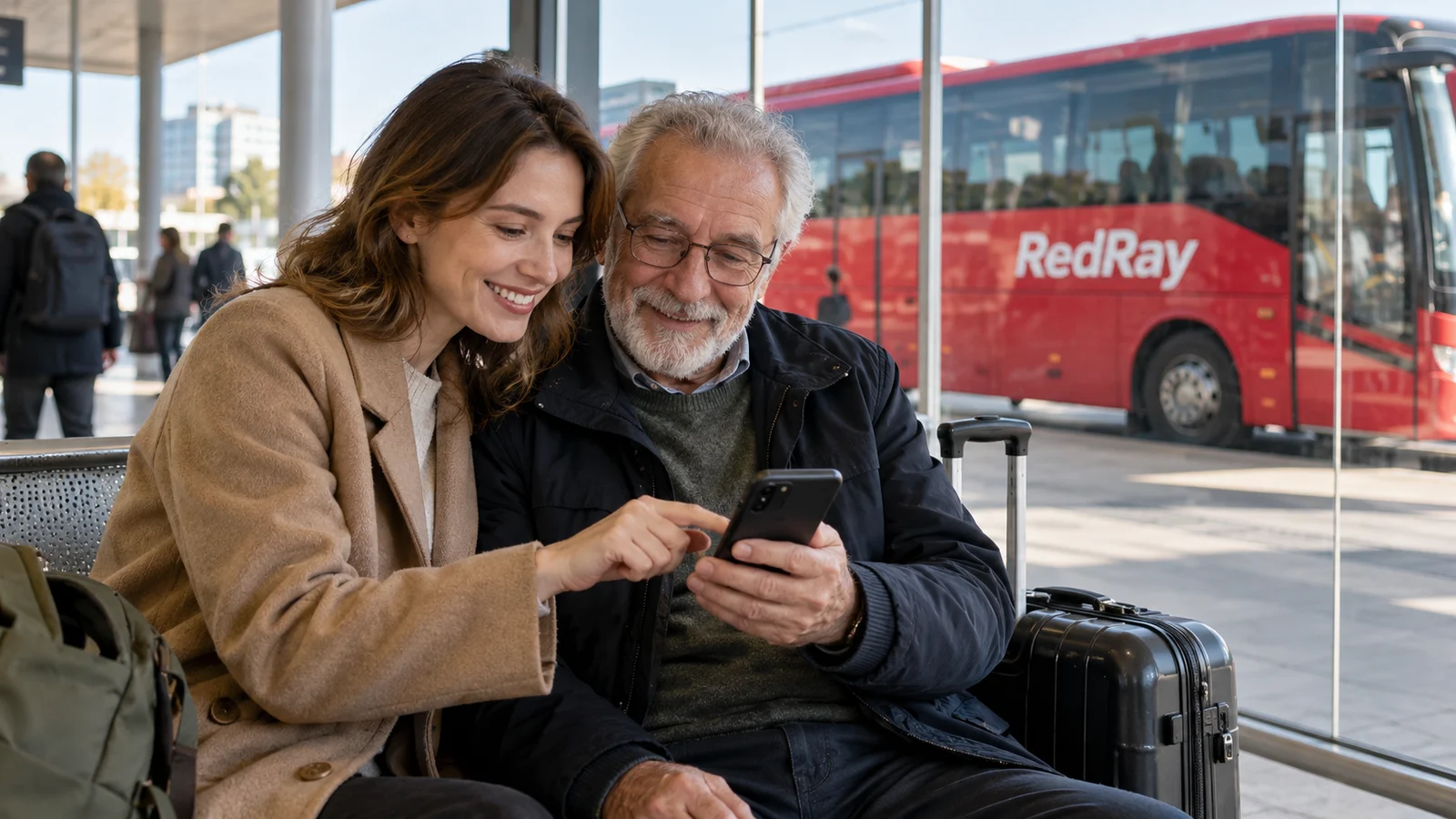
In brief: when paying for a relative's or friend's coach ticket, distinguish the passenger, buyer and recipient of messages. Passenger fields must identify the person travelling. Before paying, establish where the ticket will arrive, how updates will reach the traveller and who can request a refund.
Three roles in one booking
The passenger travels, the buyer makes the booking and the payer funds it. These may be different people. Do not put your own name in the passenger field because you are buying your mother's ticket with your card. Read field labels and check the summary, especially after browser autofill.
The contact email may receive the ticket, receipt or confirmation; the phone may receive boarding updates. Procedures differ by seller. Understand each field rather than using the cardholder's details everywhere.
Prepare the details first
Ask the traveller to confirm their name as shown on their travel document, the date and route. Do not copy a nickname from a messaging profile. Share additional required details through a secure channel and only to the extent necessary.
Agree on the boarding and destination stops separately. “The city centre” is not a specific coach station. Show the traveller the address and time before paying to avoid an unwanted terminal or overnight arrival.
Which phone number to use
If the form allows a passenger contact for urgent updates, use a number they can access during the trip. Check that calls or messages work abroad. If only the buyer's number is provided, the buyer must stay reachable and relay updates promptly.
For someone without a smartphone, arrange a printed ticket, support contact and relative who will check notifications. Obtain permission before using another person's number. Ask how to update contact details if the passenger's number changes before departure.
Is the payer's card needed at boarding?
Do not assume all carriers follow your previous experience. Read the service's document requirements. If third-party payment verification is unclear, ask the seller before buying for written confirmation of what the passenger needs when the cardholder is not travelling.
Never give the traveller a card security code, banking password or one-time code. Ask specifically: “The ticket names the passenger but another person paid. What is required at boarding?” General payment information is not a case-specific answer.
Share the valid ticket
After payment, check the booking number, status and ticket file. A bank debit alert is not necessarily a boarding document. Send the confirmed ticket in a format the passenger understands and ask them to open it with you: a messaging-app download may be incomplete.
Add the date, time and address without replacing the ticket itself. Keep an offline file, not merely a link to your inbox. A printout must show readable numbers and codes without missing important pages. Mark superseded versions separately after a service change.
Who receives service changes?
Plan communication before departure if emails reach the buyer while the passenger is already travelling. Ask the traveller to acknowledge changes to boarding time or location. An unread message can be insufficient, particularly for an early departure.
Do not forward an unexplained screenshot. Include the service or booking number, date and what changed. If the passenger cannot open a map, provide the address and landmark in text. Verify conflicting updates through official support before directing them elsewhere.
The passenger may not receive the refund
If plans change, check who can access the booking and how requests are submitted. The seller may require the reference and reasonable supporting information. Do not share your account password merely to enable a request; use the official procedure.
The refund method depends on the original transaction and seller rules. Do not promise a relative payment to their card when you paid with yours. Confirm the amount and channel before cancellation, and agree on financial arrangements separately from travel.
A family example
Your father travels alone. You verify his name and stop, enter agreed contacts, pay and share the file. Before departure he demonstrates that it opens offline, and you agree who checks updates. This reduces dependence on a single person, phone or inbox.
If the buyer cannot stay reachable
If you will be working or travelling at departure time, share the document beforehand. Make sure the passenger knows the booking number and can quote it to support. Agree on a time and official verification method if a financial request requires your involvement.
A backup family contact does not automatically have access to the purchase. Do not promise that anyone in a group chat can change the passenger or cancel. Check the procedure and arrange assistance without shared passwords.
A useful short message
Send: “Your service: date, boarding city and address, departure time. Ticket attached; save it on your phone. We will communicate updates this way.” Copy details from the valid confirmation, not an old search. Mark unconfirmed platform details as requiring a check.
Ask the passenger to repeat the date and place in their own words. This checks understanding, particularly when buying for several people on different dates. Repeat the process after a ticket update so the traveller can distinguish current and old versions.
For multiple relatives, recheck each passenger after autofill. The buyer's contact may stay the same while names differ. Compare the summary with your list before paying, then send each person their own valid ticket and journey details.
Questions and answers
Should the payer be entered as the passenger?
Not if they are not travelling. Enter the traveller in passenger fields and use contact and payment fields for their stated purposes.
Is forwarding a payment notification enough?
Check the required boarding document. Share the valid ticket and necessary confirmation, not just a bank alert.
What if the ticket only reaches the buyer's email?
Provide an accessible offline copy and agree on how the passenger will receive later updates.
Can I share card details just in case?
Do not share secret payment information. If verification is required, check the safe official procedure before departure.