


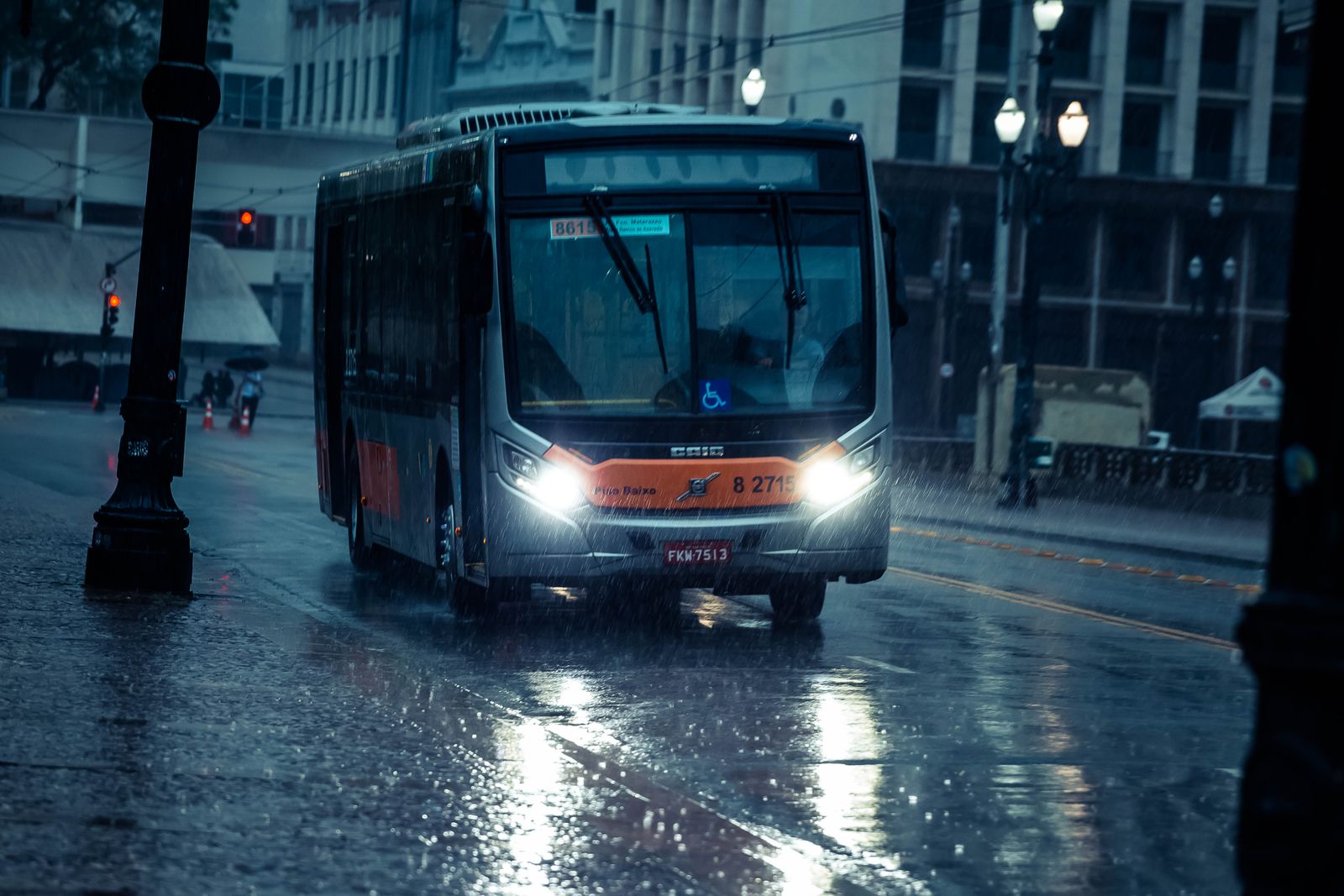
Bad weather affects not only the bus’s speed, but also the route to the stop, visibility of the platform and the risk of missing your connection. That’s why allowing plenty of time and ensuring your hand luggage stays dry are more important than a schedule that’s precise down to the minute.
Check more than just the forecast
Check service alerts, road conditions and the transport operator’s announcements. The weather at your departure point may be fine, but conditions on the route may be challenging. Do not ask the driver to make up for lost time at the expense of safety.

Protect your belongings
Put documents and electronic devices in a waterproof bag inside your suitcase. Use a suitcase cover or an inner liner, as luggage may be loaded in the rain. Make sure your shoes have non-slip soles.
Allow plenty of time for connections
Allow extra time between flights and do not book any essential appointments immediately after arrival. If a delay does occur, notify your accommodation or the next carrier and keep a record of the confirmation.
On arrival
Choose a well-lit route with no flooded crossings or slippery steps. If public transport is suspended, use official information channels and a reputable transport provider to get to your destination.
What to check before you set off
Open your ticket and check the full name of the stop, local time, luggage rules and the transport operator’s contact details. Save the relevant pages offline, inform a loved one of your itinerary and do not schedule an important connection too close to your estimated arrival time. If your journey involves special requirements — such as accessible boarding, the carriage of medical equipment, a pet or non-standard luggage — obtain written confirmation before the day of departure.
A quick checklist
- check your ticket, the exact stop and the current time;
- save your documents, map and important contact details offline;
- allow plenty of time and have a backup plan;
- keep your phone, charger, water and any necessary medication with you;
- use the carrier’s official channels.
Before setting off, check the packing list for a long coach journey and the list of documents required for travel to Europe. Look up current services on RedRay.
After your journey
Do not delete your ticket or messages immediately upon arrival. Check your belongings, expenses and any documents you’ve kept. If you need to contact the transport operator, describe the events in chronological order, include the time, journey number and confirmation, and keep the originals with you. This approach helps to separate facts from emotions and get a meaningful response more quickly.
Frequently asked questions
Can a service run on schedule despite bad weather?
Yes. Arrive at the stop in good time and keep an eye on official updates; do not assume on your own that the service has been cancelled.
What should I do with wet clothes on board?
Bring a lightweight bag for wet items and a dry outer layer. Do not block the aisles with your umbrella or luggage.